Author Archives: Sam

Florida Trail 2025

The following post is part of a senior project Sam completed for his high school diploma. He and Eli hiked over 1100 miles on the Florida Trail from Ochopee in Big Cypress to Fort Pickens in Pensacola Beach January 12 to March 24, 2025.

Boys Hiking
Eli and Sam at the Southern Terminus of the Florida Trail, January 12, 2025

The Florida Frail (FT) is one of eleven National Scenic Trails in the United States. It starts in Big Cypress National Preserve and runs north through the peninsula of Florida and west through the panhandle, ending on Pensacola Beach near the Alabama border. With over 1300 miles of trail, hikers pass through many of Florida’s unique and diverse natural landscapes including swamps, hardwood forests, prairies, and pine scrub, and alongside rivers, lakes, freshwater springs, and beaches. My oldest brother Eli and I first discovered the trail on a weekend camping trip in February of 2024 in Ocala National Forest, as we were trying to spend more time outside. We stumbled across the FT because it runs right past Alexander Springs, where we saw a trailhead and a map. The idea of hiking with just the bare necessities across the whole state sounded like the challenging adventure we were looking for. We both ruminated on the idea for a while before fully committing to it in September of 2024, allowing us five months to prepare for a departure in January of 2025, when the weather would be the most agreeable.

Planning, Preparation, and Gear

I spent a lot of time watching YouTube videos on thru-hiking and acquiring the necessary gear. I learned that an average of eighteen miles a day was a reasonably achievable goal for healthy individuals on good trail conditions, so we formed the expectation of completing the trail within sixty hiking days. To plan and execute our trip, we used Far Out, a navigation app with the necessary information about water sources and camp sites on the trail. Eli also carried a Zoleo satellite communicator for emergencies and to allow family to track our location. Food could be acquired in towns along the trail every two to five days, each day’s worth of food weighing about three and a half pounds. The trip revolved around resupply locations; we carried only what we needed to get from one store to the next to keep the weight of our packs as low as possible. We each carried three one-liter water bottles, a water filter, and a single two-liter water bag to aid in gathering and filtration or to provide additional storage. We could get water from streams, lakes, swamps, or unguarded water faucets in rural areas. A general rule of thumb is that you need one liter of water for every five miles and one and a half liters for a night without a water source. Due to frequent water sources and favorable weather and trail conditions on the FT, we rarely carried more than two liters per person. I learned that most acceptable gear is pretty expensive; however, many things can be shared to cut cost and weight (a tent being the most expensive and heaviest shareable item), but that it’s better not to go cheap on important things like backpacks, shoes, or sleep systems, as those are the things on which you rely most. But little things like waterproof backpack liners can be replaced with trash bags. Overall, any hiking gear can only satisfy two of these three criteria: affordable, high quality, and lightweight.

The Hike

In hindsight, I can break the trip roughly into thirds, three distinct phases one might categorize as Acclimation, Enjoyment, and Mastery.

Florida Trail Map.jpg
Florida Trail Map

Phase One: Acclimation

Because we had never done anything like this before and had barely broken in our gear, the first phase represented a big adjustment period. We had a lot of learning to do, and we constantly experienced aches and pains. We learned what foods we did and didn’t like, what time we liked to get up and how to efficiently plan around food and water. We also learned what gear was good and what was unnecessary. For example, our tent poles had a serious issue that required us to jury-rig our tent until we could replace it in the first major city. I also figured out early on that the comfort of warm food was not worth the weight of a cook-system, so I ditched the burner, titanium pot, and fuel cartridges and resorted to the common thru-hiking tactic of “cold soaking” foods like instant oatmeal or mashed potatoes.

Tent
Two-man tent from REI

Our parents dropped us off at the trail head near the Oasis Visitor Center in Big Cypress National Preserve. The first two days we trekked through the Everglades between US 41 and I-75 in a mix of ankle-to-knee-deep water in cypress swamps, across large pine and palmetto islands, and through dry rocky marshes. Crossing I-75 northward, the trail passes through the Seminole Indian Reservation for a full day’s hike before entering the South Florida Water Management Area. There was a church that ran a hiker ministry, providing the only location to camp within the Indian Reservation; it was here where we met some other hikers: a pair of middle age women called “Boston” and “Cubby,” an experienced hiker called “Ice Man,” and man in his sixties on his first thru-hike nicknamed “Father Tom.” I would become friends with Father Tom as our paths crossed a few times along the trail, and I still maintain contact with him. It was here that Eli and I also received a sort of joint trail name, “The Boat Brothers,” from Boston and Cubby, whom my parents had met at the trail head and chatted up.

Big Cypress National Preserve

From the Indian Reservation we walked straight onto the levees that run northward through the South Florida Water Management Area. In this section, we spent days walking in straight lines on top of 20ft-tall levees with gator-filled canals on either side for as far as the eye could see. I had set a goal for myself on this trip to avoid digital media distraction and entertainment (like music, audiobooks, or podcasts), but by the end of this section it became apparent that this goal was not reasonable or attainable for me. The hours seemed to drag on endlessly and I began to feel extremely bored and agitated. It also became increasingly difficult not to focus on the discomfort of foot pain. The harsh pavement and gravel roads we had been walking on began to take their toll on our feet, causing them to become increasingly tender as we progressed. This was a constant inconvenience to which we later became accustomed, but for the first three weeks it was the primary challenge. Listening to music, books, and podcasts made the miles more bearable.

Levees through South Florida Water Management District
Long, straight road through South Florida Water Management Area

After a Walmart resupply and a night in a shabby hotel in Clewiston, also known as “Americas Sweetest Town” because of its sugar production, we spent the next three days walking around the west side of Lake Okeechobee and into Okeechobee City. North of Okeechobee we walked on roads and trails along the Kissimmee River, through pastureland, oak hammocks, sandy pine forests, oak and palm forests, and across large palmetto prairies. We resupplied at occasional small-town convenience stores.

Kissimmee River Prairie

One such resupply location was 10 miles off-trail by road; it was the only substantial resupply in a 160-mile stretch and we didn’t feel like carrying upwards of eight days’ worth of food (more than 25 pounds). The resupply point was a well-stocked convenience store where we could get our phones and batteries charged, but that’s where the benefits ended. There were no campsites nearby, no vacancy at the only motel where we had hoped to stay, and the day was getting late. It seemed as if we would be spending the night under a streetlight at the edge of town. Right as we were cracking open our sad little cold-soaked dinners at the outdoor picnic table, we were approached by an older fellow who was curious about what we were doing. His name was Doug Adams, and we had a pleasant exchange of stories. When he asked where we were planning to stay the night, we told him; he deemed our plan unacceptable and invited us to his home for dinner and offered us his front yard to pitch our tent in. We had a lovely time chatting over dinner on the porch of his home with him, his wife, and some other guests he had over. He was a very talkative guy, intrigued about our upbringing on a sailboat, and loved telling us about his early life adventures. In the morning, he was happy to give us a ride back to the trailhead. Through this experience I learned that being polite, personable, and interesting can get you a long way, and that God will put the right people in your path when your plan sucks.

North of Kissimmee River Prairie
Scrub Pine North of Kissimmee River Prairie

Toward the end of this stage in our hike, we stayed a night at another hiker-friendly church where we reunited with a few of the hikers that we had met along the way. We also met “Brushy Burt” for the first time; he was an old-school hiker who was on his third hike of the FT and who had allegedly chosen the swamp over his marriage. He had a wealth of knowledge on flora, fauna, and wilderness survival which he loved to share. Brushy Burt was my favorite character that we got to know. At the end of Phase 1, my parents and two of my siblings drove to Orlando the first weekend of February to pick us up. We spent a few days at an Airbnb house in Oveido where we could celebrate my 18th birthday and enjoy the comfort of hot showers, soft beds, real food, and clean laundry, ending what I hoped would be the toughest part of our journey.

Orlando Area
Orlando Pick-up Point

Phase Two: Enjoyment

Unfortunately, that hope was quickly crushed. In the last 100 miles or so of Phase One, I had been developing some odd blisters on the tops of my toes, but they were only a painful inconvenience. On the first night after leaving the comfy Airbnb, I developed a high fever and intense nausea and ended up needing to spend the following day and night resting in a hotel near the urban trail before moving on. After the rest, I felt confident enough to keep moving but later I would realize that my blisters and fever had been symptoms of a systemic staph infection. Otherwise, this phase was more pleasant than the last. Miles were passing more easily and we were able to just enjoy the beauty of the state.

Forest north of Okeechobee
Central Florida

After leaving the Orlando area it was a relief to be back in the wilderness. In Ocala, we appreciated the forests, springs, and lakes of Central Florida with minimal road walking.  In Northeast Florida, the trail passed through rural areas with periods of forest trail in between. Around the half-way mark (mile 550), I intended to replace my shoes via delivery from home. However, the box was running four days late thanks to a holiday and the U.S. Postal Service. We could’ve re-routed the package to the next town, but we were close to a hiker-friendly place called the Center for Peace and Justice (CPJ) and where we had already stayed one night. The CPJ had a kitchen, books, games, and beds available to hikers willing to contribute thirty bucks and a helping hand. We decided to wait for the package there, and spent four days playing board games, cooking, doing chores, and resting; the location for an unplanned delay couldn’t have been better.

Board games at the Center for Peace and Justice

Rested and with my new pair of shoes, we left the CPJ and entered Osceola National Forest. The weather was cold and dreary, but there was beauty in it. That also meant we didn’t have to carry much water. The trail was partially flooded and ran through a long-leaf pine forest with low palmetto brush. Some of the deeper sections of trail had picturesque little boardwalks. After Osceola, we encountered the Suwannee River in all its glory, right at some rapids. In the beginning, this section was amazing, containing one of my favorite trail days, but the novelty of walking along the riverbank wore off. In addition, we encountered a long part of hurricane-damaged trail along the river and the going became very slow.

Osceola National Forest
Picturesque Boardwalk Osceola National Forest

After the trail departs from the Suwanee River, it enters the Big Bend area of Florida, heading west for more than 70 miles along roads through rural Florida. After that we hiked along a subterranean river for a day and then spent a night behind some gas tanks at a convenience store. It was around this time that I noticed the resurgence of the blisters on the tops of my toes. The next day we entered the marshland of St. Marks Wildlife Refuge, walking on top of short levees before entering the historic town of St. Marks, where we spent the night (behind a much less sketchy convenience store).

The next morning in St. Marks I woke up with the blisters on my feet worse but decided to walk anyway, booking a hotel in the next town hoping that I would be able to wash, rest, and recover. Up until this point, most of my injuries would heal or improve with just a bit of rest. But this time, things got worse instead of better. The following morning, I had more blisters, local swelling, and I also felt lethargic. We were in a town along State Road 98 and needed to do a large resupply before continuing. But I was now limping badly, and it became apparent in the afternoon that I would not be able to go on without an improvement in my condition; I was developing a fever again and showing the same symptoms of systemic infection as I had before.

Campfire, Big Bend Area
Blisters and Tent Repair at Big Bend

Staying optimistic, thinking that a couple of “zero days” would resolve the issue, we booked a night at the local state park and took an Uber there. That night, while we were setting up our tent in light wind, the joint where the aluminum tent poles meet unexpectedly snapped. We got another night at the campsite and tried to repair it with JB Weld, which did not work. That failure, combined with the condition of my feet, made it apparent that we couldn’t keep going. Out of options, we got in contact with our parents. It turned out that Mom had some friends from the Keys (Alex and Josh Mann) who had started a homestead in the Big Bend area, and who had offered to help us out. Josh was able to pick us up that very day. We stayed in an RV on their property for four days. In that time, they provided us with real food and fellowship. Eli was able to be helpful and clear some land around the property with Josh. He also got a ride into Tallahassee with Alex to buy a new tent. My blisters cleared up with disinfectant, salve, and rest. Overall, the Manns were extremely hospitable and salvaged what seemed to be an adventure-ending series of unfortunate events. Through this experience, I learned the value of building and maintaining connections: one day networking might save your ass.

Boys at the Mann's House
Home-cooked food and a place to rest (Thank God for Alex and Josh!)

Phase Three: Mastery

Phase three represented the mastery of our daily routine and planning. We had become acclimated to the lifestyle of hiking bums and remained mostly pain-free for the rest of the trip, allowing us to be more confident and relaxed. For those reasons, this phase of the trip was my favorite. The landscape was, on average, much drier with some gradual altitude variation, and we even occasionally saw the horizon from hilltops. But before we could climb to any hilltops, we first had to pass through the Apalachicola National Forest, which contained the final swamp section.

Apalachicola National Forest

Josh Mann dropped Eli and me off at a trail head on the side of the road about a day’s hike from the final swamp section. Little did we know that we were beginning the most challenging few days of the trip. It had been raining for some time and was forecasted to continue raining for the next few days. So, the trail was wet and our gear became water-logged. I had spent nearly a week off my feet, so the miles weren’t passing as easily as before. And at night, the heavy rain knocked the condensation off the inside of our tent, preventing us from getting any good sleep and wetting our remaining “dry stuff.” Despite these unpleasant conditions, the actual trail was beautiful, the swamp was deep, and I remember this section as one of my favorites. We were in and out of the most intense segment of swamp, Bradwell Bay, by the end of the second day back on trail, but we had nothing dry left.

Bradwell Bay
Bradwell Bay

After waking up in a flooded campsite and walking through some drizzle, the sun came out for a couple hours, and we were able to somewhat dry our stuff at a trailhead. We also found Brushy Burt doing the same, and we hung out with him and ate our lunches. Afterwards we kept moving, walking through sections of flooded pine forests and through short but very deep parts of the Titi swamp. Our planned campsite turned out not to be viable, forcing us to hike into the night. The pinnacle of suck occurred after sundown when we discovered that we weren’t finished with the Titi swamps and would be walking through them in darkness. But we had a moment of hilarity when standing shin-deep in muddy water, looking into the creepy darkness of the swamp ahead. We turned to each other and laughed at the absurdity of the situation, because that’s all we could do. That night we completed that section of trail and camped in a nice little trailhead parking lot. But I remember that very unpleasant experience fondly because we chose to respond with humor.

Night Hike in Apalachicola National Forest
Night-hiking through Titi swamp

The next day was long, but we completed the last swamp section of the FT and never got our socks and shoes wet again. In the Central Panhandle region, we passed through more than one hundred miles of a mixture of hilly forests and rural roads through small towns. Into the western end of the Panhandle, the trail primarily runs through Eglin Air Force Base, a well-maintained section with frequent campsites, crystal clear streams, and the constant sound of fighter jets and attackers conducting all sorts of light and munitions exercises.

Pearl Creek Eglin Airforce Base
Pearl Creek, Eglin Airforce Base

After exiting the southwestern end of the Air Force base, we passed through a small town and over a large bridge, onto the home stretch of barrier islands. We walked through the overpopulated beach tourism zone of Santa Rosa Island before entering a long stretch of sand dunes, the nesting grounds for multiple protected bird species. We walked along the beach for a couple of miles but otherwise the trail just followed the road that went the length of the barrier island.

Beach Hike Santa Rosa Island
Beach hike, Santa Rosa Island

We spent our last night camped amidst the sand dunes, probably one of the worst campsites of the entire trip due to the biting no-see-ums. And the next morning, on March 24th, we walked through Pensacola Beach and rather anti-climactically found the Northern Terminus: a broken brick monument at Fort Pickens. It had taken us 71 days to walk 1111.5 miles of trail.

Northern Terminus Florida Trail
Eli and Sam at the Northern Terminus of the Florida Trail, March 24, 2025

Our parents, accompanied by Rachel, had spent the previous day and a half driving up to meet us at Fort Pickens and provide transportation back home. They had begun doing some camping excursions of their own, out of the back of the Suburban, in the Everglades/Big Cypress area and were excited to come do some camping with us. We spent the night at the Fort Pickens campsite and enjoyed showers and hot food. The next morning, we had eggs, bacon, pancakes, and hot coffee (thanks to mother!) before getting on the road. We stopped again to camp that night, revisiting a previous stop on the Florida Trail, Mike Roess Gold Head Branch State Park, where we enjoyed all the comforts of car camping again. The next day, we arrived back in Naples. It was certainly strange to be back home in a fraction of the time it had taken us to hike the same distance.

Mom making pancakes
Pancake Breakfast in the Great Outdoors

Conclusion

When I committed to hiking the Florida Trail, I wasn’t looking for a journey of enlightenment—just a good adventure. But I ended up learning a lot about myself and how to respond, both physically and mentally, to discomfort and stressful challenges—and how not to respond to them. I say that now because, looking back, I was often more focused on hitting a specific mileage or keeping a routine than on adapting and taking things less seriously. That mindset led to mental fatigue and discouragement whenever things went “wrong.” In the final third of the trail, I recognized and began to correct that inflexible attitude, adopting a more relaxed stance, which greatly improved my experience.

I found that I didn’t miss many of the comforts modern society provides—except for hygiene and good food—those were the greatest sacrifices. I learned that the human body is amazing; its capacity to adapt and heal when conditions drastically change is incredible. On trail, I would often go to bed with terrible aches or minor injuries, unsure about being able to get up and walk the next day, only to wake up in the morning surprisingly capable of doing so. I learned that whether a day feels good or bad depends more on the progress made toward a goal than on the discomfort or difficulty experienced along the way. This leads me to believe that the answer to living a fulfilling life lies not in the acquisition of great wealth and many comforts, but in making progress and having a sense of purpose, as well as in growing the relationships with those alongside whom you literally or figuratively walk. Though I likely won’t return to thru-hiking beyond short trips for my own enjoyment, I know I’ll continue to face many of the same mental and physical challenges in other areas of life. And I know that I am now more equipped to handle life’s inevitable obstacles.

Florida Panhandle
Sunset, Florida Panhandle


Gear List

  1. 50L ultralight framed backpack
  2. 2L waterproof fanny pack
  3. Bear proof food bag + a scent proof plastic bag
  4. 20-degree ultralight quilt
  5. Insulated air mat
  6. Folding insulated foam pad
  7. A 2 person tent           
  8. Salomon trail runners 
  9. Collapsable trekking poles
  10. 2L water bag
  11. Sawyer water filter
  12. 2x 1L plastic water bottles
  13. Electronics” Night Core headlamp, 10 Ah battery, 50W charger, charging cables,
  14. Bear spray (Eli carried the sat device)
  15. Hygiene/toiletries: Titanium trowel, minimalist toiletries, soap. 
  16. First aid for minor injuries and a compression wrap.
  17. Repair stuff for air mat punctures and tent tears.
  18. Titanium spoon and ice cream container for eating.
  19. Cotton tea towel for cleaning off before bed.
  20. Trash bags for waterproofing

Clothing:

  1. Frog Togs rain jacket
  2. Decathlon down jacket
  3. Terrex lightweight fleece jacket
  4. Light Merino wool T-shirt
  5. Sun hoodie
  6. Merino wool Buff
  7. Boonie Hat
  8. Pit Vipers
  9. 1 pair of Merino Wool underwear and a backup pair of cotton
  10. Merino wool leggings
  11. 1 pair of Sports shorts
  12. 2 pairs of Silver Light Merino wool long socks

Total dry weight: 12 pounds

Total with 5 days food and 2L water: 32 pounds

Ready to Go
Packing Gear, January 2025

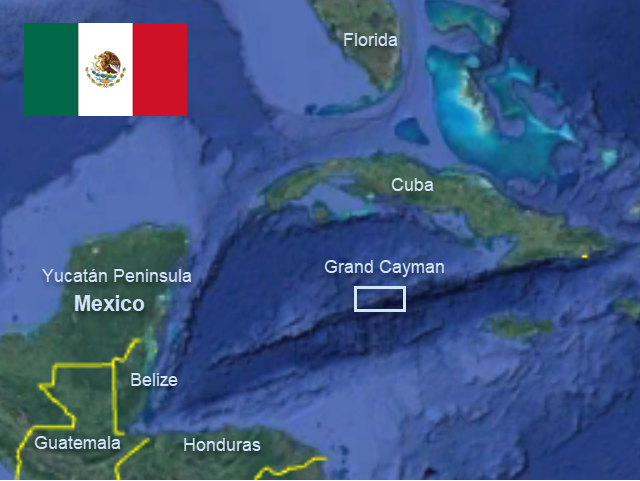
Geography Report: Mexico

Note: This is the last of the Caribbean geography reports. As Mexico is such a large country, I have chosen to focus on the part of Mexico we visited, Isla Mujeres and the Yucatán peninsula.


Basic Facts

Capital: Mexico City

People/Customs: Nearly 30 percent of the Mexican population is indigenous (Mayan, Mixtec, Náhuatl, Otomí, Purépecha, Zapotec), 60 percent are mestizos, and the remaining 10 percent are white or other ethnicities. Most of the people practice Catholicism and even the indigenous people have mixed traditional religions with catholic practices. Most holiday celebrations include fireworks, music, and dancing. Day of the Dead (Día de Los Muertos) celebrations commemorate family members who have passed on by decorating tombs and creating elaborate alters at home.

Language: Spanish is the official language, but there are 68 Amerindian languages also spoken.

Climate: The climate zones of Mexico vary from snow-capped mountains and alpine tundra to tropical islands, making Mexico attractive to visitors looking for variety. The main regions include: tropical wet, tropical wet-and-dry, semi-arid, desert, temperate with dry winters, humid subtropical, and Mediterranean. Where we were, in Isla Mujeres, the weather was warm, sunny, and breezy with predominant easterlies, cold fronts with north wind in the winter and spring, and tropical waves and risk of hurricanes in the summer and fall.

Food/Farming: typical Mexican meals consist of corn, beans, rice, tortillas, squash, chilies, avocados, tomatoes, sweet potatoes, and a various meats, like turkey, beef, goat, pork, chorizo, and chicken. Mexico is also known for its delicious tacos. Corn has been Mexico’s most important food for thousands of years, and it has a religious significance for the Maya, Huichol and many other indigenous groups. Fruits grown in Mexico include: pineapples, citrus fruits, star fruits, mangoes, papayas, melons, tomatoes, and other tropical fruits. A popular drink is tequila, made from the agave plant.   

Government: The United States of Mexico has a Constitutional Republic, with a President as head of state.

Currency: Mexican Peso, about 18 pesos to the dollar.

Art/Music/Culture: The culture of Mexico is a mixture that comes from its history of Old and New World influences. Cultural influences include traditions from the Maya and other indigenous peoples, Spanish language, music and religion from the conquistadors and settlers, and a mixture of European, African, and Asian cultures that arrived later in Mexico. The Spanish brought Roman Catholicism, which became Mexico’s main religion and slowly mixed with the indigenous religious practices. Mexico has a rich artistic history, with world-famous artists like Frieda Kahlo, as well as arts and crafts like weaving, pottery, leather-working, and wood-carving. Decorated skulls are a common motif. Popular musical styles include mariachi and ranchera, which use the sounds of various guitars as well as violins, trumpets, and accordions.

History of the Yucatán Peninsula

The Yucatán’s oldest traces of humanity date back 11,000 years according to artifacts found in the Loltún caves and Tulum. It is supposed that the first Mayas arrived in the Yucatán around 2500 BC. The Maya had a knowledge of astronomy, math, and architecture, the evidence of which can be found all over Mexico in the form of pyramids, palaces, and other structures. The Maya were also good artists, based on jewelry, carved limestone, and plaster artifacts found at ruins.  

Around 600 AD the Maya civilization was at the height of its Classic period. The Maya lands at this time were not ruled as an Empire, but as a collection of independent city-states. Near the end of the Classic period, the Mayans moved to the Yucatán, with ruins like Chichen Itzá showing us construction very different from earlier Mayan settlements (Tikal in Guatemala, for example). After the Classic period, the collapse of the Maya came very suddenly. One theory is that as the Maya civilization grew, they were not able to grow enough food to feed the people. The Maya then weakened and were taken out when the invaders from central Mexico came.

Mexico was “discovered” by the Spanish conquistador Hernan Cortes in 1485. The Spanish came to the Yucatán in 1513 when Juan Ponce de León and Antón de Alaminos set out to find land west of Cuba and came across a large peninsula. The first attempt at the conquest of the Yucatán was made in 1527, when the Montejo family and a band of other men were sent from Spain to Cozumel, but they decided to sail around the peninsula and quell the unrest in Tabasco. They decided to establish their base near Campeche and push inland to conquer the Yucatán, but four years later they were forced back to Mexico City. In 1542, after allying with the Xiu, the Montejos defeated the Cocomes, and founded the city of Mérida. In four years’ time they had put most of the Yucatán under Spanish rule. The Mayans then became slaves for Spanish settlers.  

Throughout the colonial period, the native Maya and other indigenous groups continued to resist Spanish rule. The harsh treatment of natives by the Spanish led to many revolts, most of which were unsuccessful. In 1821, after a war with Spain, Mexico succeeded in becoming independent, and the Yucatán became part of the Mexican Federation. Despite the new government, the Maya were still forced to work under horrible conditions which led to the Caste War. In 1847, Mayan chiefs led a revolt against the descendants of Spanish settlers who had political and economic control. This act started an all-out war between the Maya forces and the Yucatecos (Spanish descendants). The war officially ended in 1901 but some of the small settlements and towns refused to acknowledge Mexican control. The war spilled the blood of over 200,000 people.

From 1876 to 1911, when Porfirio Diaz ruled Mexico, he brought the country into the Industrial Age. He passed laws that created an even larger number of landless peasants and concentrated the wealth in the hands of a smaller elite. In the Yucatán, wealth was acquired by making rope and other products from plant fibers. Diaz was removed from power in 1910 when a war broke out, sending the country into chaos for the next decade.   

By the 1970s, huge oil reserves were discovered in the Gulf of Mexico, which brought new investors to the country. With new money coming in, Mexico invested in infrastructure on a large-scale, and installed a central oil processing complex in the Bay of Campeche, which was producing a million barrels of crude oil a day by 1981. The influx of oil money also led to the development of the Quintana Roo and Cancún as tourist destinations. With white sand beaches, crystal-clear turquoise-colored water, and nearby ancient ruins to explore, this area soon became known as the “Riviera Maya” and attracted tourists from all over the world. While oil prices fluctuate, creating booms and busts, the tourism industry remains fairly constant, despite the occasional hurricane causing damage and requiring rebuilding.

Landforms/Flora and Fauna

Mexico is a large country and has a very diverse landscape. To the north is the U.S.A., to the east, the Gulf of Mexico and Caribbean Sea, to the south, Belize and Guatemala, and to the west, the Pacific Ocean. Baja California is located in the northwest, a jagged finger of land with mountains and desert bordered by the Pacific Ocean and the Gulf of California. Mexico has the world’s largest volcanic field. Central Mexico has the Sierra Madre mountains and a central plateau. Mexico City is in the south-central part of the country and boasts a population of 21 million people in the greater metropolitan area. The Yucatán Peninsula is flat, with a coral limestone bedrock covered by littoral forest and filled with sink holes, caves and cenotes. Isla Mujeres is a small island to the north of the Yucatán, surrounded by beautiful water and coral reefs. Because of this variation in land forms, the flora and fauna are found in equally diverse habitats—from pine forests to tropical jungle, from cactus-covered deserts to palm-fringed beaches, from treeless volcanic peaks to the fertile Bajío region where produce is grown. Some animals you might see in Mexico are spider monkeys, the rare axolotl (salamander), cacomistle (mammal), Mexican prairie dog, ocelot, cenzontle (bird), zoloitzcuintli (hairless dog), quetzal (bird), endangered vaquita porpoise, coati, and Mexican gray wolf. Near Isla Mujeres, you might go in search of whale sharks or sail fish, or see barracuda, snappers, colorful reef fish, and marine invertebrates while snorkeling and diving.

Things to do in the Yucatán/Isla Mujeres

On the mainland there are cenotes to explore, Mayan ruins like Chichen Itzá and Tulúm, beaches along Cancun or on Isla Mujeres, snorkeling and scuba diving along the Caribbean coast, visiting the Spanish colonial city of Mérida, horseback riding, and deep-sea fishing. Also, good tacos can be found almost everywhere!

Bibliography

“11 Awesome Native Animals You Must See in Mexico.” www.theculturetrip.com . Accessed July 2019.

“Mexico.” (Basic Facts) Wickipedia. Accessed June 2019.

“Mexico’s Seven Climate Regions.” www.geo-mexico.com. Accessed July 2019.

Onstott, Jane. National Geographic Travelor: Mexico. 2006: National Geographic Society, Washington D.C.

“Yucatán Peninsula: History.” Lonely Planet. www.lonelyplanet.com . Accessed July 2019.

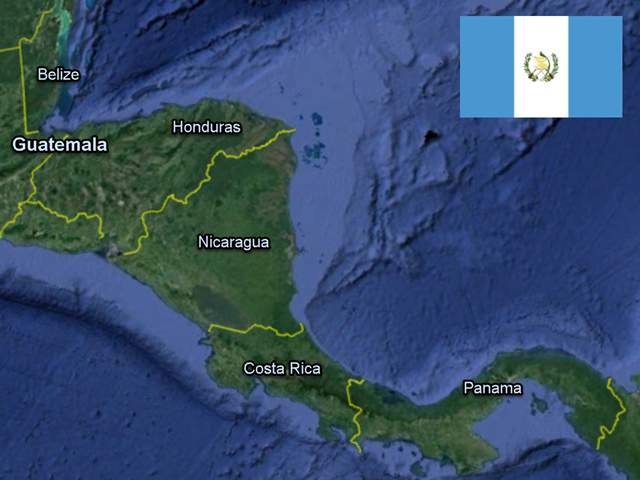
Geography Report: Guatemala

Editor’s Note: After nine months in Guatemala, Take Two is preparing to head north toward Mexico–likely Sam’s last geography report–as we complete our three-year, 5000+ nautical mile circle of the Caribbean this spring.

Basic Facts

Capital: Guatemala City

People/Customs: Guatemala has a population of more than 16.5 million, (as of 2016), made up of many different people groups about 41% Ladino (mestizo), 11% K’iche, 8.3% Q’eqchi, 7.8% Kaqchike and a mixture of other Mayan and indigenous groups. Guatemala’s religious makeup is mostly Evangelical Christian and Roman Catholic, but there is also a Jewish population, as well as small groups of Muslims and Buddhists.

Language: the official Language is Spanish, but several Mayan dialects are also spoken (Q’eqchi for example). English is taught in schools, but not commonly spoken.

Climate: Guatemala is bordered by two oceans (the Pacific and the Atlantic) making it susceptible to hurricanes, volcanos and floods. Temperatures range from near-freezing at the highest altitudes, to a humid 90° on the Caribbean coast. Guatemala has a dry season and a wet season (rain depends on altitude and region) and is in the hurricane zone, though Rio Dulce, which runs inland, is considered safe from hurricanes.

Food/Farming: typical Guatemalan food consists of rice and black beans, some sort of meat (chicken, pork, beef, or fish), salad or cooked vegetables, fried plantains, and corn tortillas. The volcanic soil of Guatemalan highlands helps with the growing of tropical fruits (bananas, mangoes, pineapples, papayas, melons, etc.) and vegetables (lettuce, cabbage, carrots, tomatoes, potatoes, corn, and beans). Cattle, pigs, and chickens are raised for meat, and freshwater lakes provide fish. Guatemalan coffee of the mountain regions is exported all over the world.

Government: Guatemala is a constitutional democratic republic with a president.

Currency: the Quetzal (1 dollar= about 7.5 Quetzals)

Art/Music/Culture: the music in Guatemala was influenced by the Spanish settlers, the African slaves, and the Mayan natives. Some of the main musical types are nueva cancion, salsa and punta. Mayan musical instruments included drums, horns, and flutes, and a wooden xylophone called a marimba is still popular today. Carvings from wood, stone, and jade are common, and the markets in the mountain regions which sell colorfully-dyed and woven cloth are famous.

History

As in Belize, the Mayan civilization plays a large part in Guatemala’s history. The Mayans were in Guatemala thousands of years before the Spanish conquered their land. It was an advanced civilization with a written language and a complex religion consisting of many different gods and spirits. The Mayans were expert builders and possessed advanced knowledge of mathematics and astronomy. They also believed in an afterlife where humans who were sacrificed continued the battle of good and evil. When the Spanish came to Guatemala in 1519, they tried to convert the Mayans to Christianity, but only succeeded in a limited way. As the Spanish settled in Guatemala, the Mayans were either killed, enslaved, or forced to flee to remote places. Many fought back, and many died of diseases brought from Europe. Since no gold or silver was found in Guatemala, the land and its people—as slave laborers—were exploited for tobacco, chicle, cacao, cotton, indigo, and cattle. Somehow, despite Spain’s three centuries of brutal rule, and continuing conflict with the Guatemalan government, their culture has survived until the present day.

The first capital, Villa de Santiago de Caballeros was founded in 1527 (present-day Antigua). After flooding and earthquakes destroyed it in 1773, it was moved to its present location (Guatemala City). During the colonial period, power was concentrated with Spanish landholders and the Catholic church, and the subjugation and persecution of the Mayan peoples that began in this period continued into this century.

In 1821, several Central American regions, including Guatemala, claimed their independence from Spain and formed a loose federation of states. In 1838, the Honduran and Guatemalan leaders of a liberal party invaded Guatemala, took over the government, and executed the head of state, beginning more than a century of violence and political strife as liberal and conservative factions fought for government control.  After warring with neighbor states, Guatemala declared its independence as a nation in 1847, though border disputes persisted into this century.

Coffee was brought to Guatemala by Jesuit missionaries in the mid-1700’s as a decorative plant but was not grown as an agricultural product until the mid-1800’s when the natural dye companies went out of business due to the invention of synthetic dyes. There are eight distinct coffee growing regions in Guatemala today and its coffee is exported all over the world.

In 1904, the United Fruit Company entered the scene, and eventually bought about 40 percent of Guatemala’s land, cultivating 14,000 acres of land with bananas and other tropical fruit, and building railways, roads, ports, and a fleet of ships. The United Fruit Company had a hand in many other business and political ventures. (The fruit companies still have a lot of economic and political power.)

Jorge Ubico was a general in the Guatemalan army who was elected president in 1931 (in an election with no other candidates) during the Great Depression after José María Reina Andrade, Manuel María Orellana, Baudilio Palma, and Lazaro Chacón had all been deposed for separate reasons in the previous 2 years. Ubico was known by his efficiency and cruelty; he reinforced the police and military greatly and instated forced and slave labor. He was forced to resign 1944 after a series of violent uprisings.

A new constitution was made which allowed all adults the right to vote and limited presidents to serving one term in office. Ubico’s successor lasted only one year. In 1945, Juan José Arévalo was elected and served a six-year term, survived 25 coup attempts, and established a social security system and health reforms. After Arévalo, a military leader, Jacobo Arbenz Guzmán was elected and made socialist reforms. Because he was friendly to the communist party and passed agrarian reforms which redistributed land to Mayan peasants, he lost the support of the United Fruit Company and incited the United States to get involved. Guzmán stepped down in 1953 before the CIA could mount an attack to depose him, and what followed was thirty years of economic and political troubles during which the constitution was revoked and the Mayans lost land holdings and civil rights. President Armas, supported by the United States, was shot by his own body guard in 1957.

After much turmoil, General Fuentes took power, but was later overthrown when the U.S., fearing a communist revolution, backed a military coup and a new leader. The next several years saw constant change and conflict—with the military in charge of the government and guerrilla fighters representing the people involved in a bitter, decades-long civil war.

Initially, the two sides were the FAR (Rebel Armed Forces) and PGT (Guatemalan Labor Party) against the MLN (National Liberation Movement), a right-wing organization aligned with the military and blamed for using political assassinations and death squads to silence opposition. Later, as the violence escalated, URNG (Guatemalan National Revolution Unity) and the EGP (the Guatemalan Army of the Poor), whose motto was “Long live the poor, death to the rich,” opposed the ESA (Secret Anti-Communist Army), FNO (National Opposition Front) and the government-sponsored PACs (Civilian Self-Defense Patrols). People were forced to either serve the government or join the guerrillas.

Horror stories and human rights abuses were common during the war. In one case, villagers who came to a town meeting to resolve a land dispute (over a parcel near fruit shipping lanes owned by the president) were met by soldiers who shot over a hundred men, women, and children and buried them in mass graves that the army had dug the day before.

The elections of 1990 were the first peaceful transfer of a civilian democratic government, and peace accords were signed in 1996. The thirty-plus year civil war cost hundreds of thousands of people their lives and land and created over a million refugees. Tens of thousands went “missing” (like school children abducted to serve in the army) and their whereabouts were never discovered. Some of those responsible (like Rios Montt, president in the early 80’s) were later charged for what amounted to genocide and “crimes against humanity.” Political turmoil, government corruption, and economic inequality are still common in Guatemala, where there is a huge gap between rich and poor, and the military protects the government instead of the people. Peace is tenuous, and there is always the threat of impending conflict. Despite that fact, Guatemala is a beautiful country with fruitful land, kind and friendly people, and a rich pre-Colombian history.

Land forms/Flora and Fauna

Guatemala is made up of volcanic mountains, cloud forests, rain forests, coastal plains, wetlands, and mangrove islands. On land you can find many different kinds of wild cat (like jaguars, panthers and mountain lions), tapirs, monkeys, coati, iguanas, snakes (including the infamous fer-de-lance), as well as domesticated animals like cows, horses, goats, pigs and chickens. In the air you can find many different species of macaw and parrot, toucans, oropendolas, hummingbirds, hawks, and vultures, as well as seabirds like pelicans, cormorants, sea gulls, and frigate birds. And In the water you can find several spices of freshwater fish like snook and white-fish, and on the coast, reef fish and sharks. There are pine forests, tropical forests, palm trees (like coconut palms), fruit trees like mango and papaya, ferns, air plants and hundreds of species of orchid.

Things to do

Go zip-lining, kayaking, wake-boarding, hiking, swimming in water-falls and hot-springs near Rio Dulce and Lake Isabal, climb a volcano, visit coffee plantations, or find jade and fabrics in the markets of Antigua, visit the Mayan ruins of Tikal or Yax’ha in the Peten region, or visit the villages along the shores of Lake Atitlan.

Bibliography

“Guatemala.” Wikipedia. January 2019.

“BBC News Timeline: Guatemala.” News.BBC.co.uk. January 2019.

Pavlidis, Stephen J. Cruising Guide to the Northwest Caribbean. “Republica de Guatemala.” 2014. Seaworthy Piublications, Cocoa Beach, FL.

Geography Report: Belize

Basic Facts

Capital: Belmopan

People/Customs: The population of Belize is 387,879, of which more than half are are Mestizo, a quarter are Creole (descendants of white Baymen and their black slaves), more than a tenth are Mayan, and the remaining small fractions are Garifuna, German-speaking Mennonites, Europeans, North Americans, and Chinese. A large percentage of the people are Roman Catholic or Protestant, but there are also small percentages of Jews, Muslims, Jehovah’s Witnesses, Mormons, Mennonites, Seventh-Day Adventists, and practitioners of traditional Mayan and African religions. (Garifuna are the descendants of black slaves and Carib natives which were relocated to Belize from the Bay Islands, where they had been brought from St. Vincent. They have their own distinct music, language, dress, and religion.)

Language: English is the official language, but an English creole, Garifuna, Mayan dialects, and Spanish are also spoken.

Climate: Belize has a dry season and a wet season and is inside the Hurricane zone (June-November). Cold fronts moderate the temperature and bring wind from North America during the winter and spring, and tropical waves bring heat and humidity from the Atlantic Ocean and Caribbean Sea during the summer and fall. Average temperatures in the coastal regions are between 75 and 80 degrees Fahrenheit.

Food/Farming: typical dishes consist of rice, beans, cabbage or salad, corn tortillas, and some sort of meat (pork, chicken, beef, or seafood). The Fyffe’s fruit company exports Belizean bananas to Ireland and the U.K. Other tropical fruits like pineapples, oranges, and mangoes are grown in Belize. Cacao is grown and processed into chocolate. Coconuts are also common, and coconut milk is used for drinking and cooking. Sugarcane is grown for local use and export.

Government: Belize became an independent state in 1821. Though it is no longer a British Crown Colony, the Queen is still the symbolic head of state of Belize, which is a parliamentary constitutional monarchy. The Prime Minister is the head of the government and there are two houses in the National Assembly, which makes laws. There is an independent judiciary and a Supreme Court for hearing serious cases.

Currency: the Belize dollar (BZD), equivalent to about $0.50 USD.

Art/Music/Culture: The culture of Belize is influenced by its many ethnic groups, among them the British, Spanish-speaking Mestizos, Mayan tribes, African slaves, Garifuna people, German-speaking Mennonites, and American expats. One popular type of music is called “punta rock,” a hybrid of soca, calypso, reggae, salsa and meringue. There are also traditional Garifuna drumming groups. Artisans carve wood and slate, make pottery, embroider cloth, make beaded necklaces, and weave baskets.

History

The Mayan civilization plays a large part in Belize’s history. The Maya settled in Belize starting in about 1500 BC, and there were as many as 1 million people living in Belize during the late Classic Era of Mayan civilization (600-1000 AD). When the Spanish arrived in the early 1500’s, there were three distinct Mayan territories (each with its own dialect which persists to this day). The Mayans believed that the world was flat, and they believed in many different gods, so when the Spanish arrived, they tried to convert the Mayans to Christianity. They were largely unsuccessful, though some Catholic concepts were added into the Mayan religion.

When the conquistadors arrived in Belize, they claimed it for Spain but did not develop settlements because of the lack of resources and the hostile Indian tribes of the Yucatan. In the 1600’s, the British wood-cutters started to come and settle the land. In 1763 and 1783, the Spanish granted land to the British wood-cutters but still retained sovereignty until 1786, when the British started to take control of the area that is now Belize in order to protect themselves from incoming Spanish settlers. In 1798, the Spanish sent a fleet to remove the British Baymen, English and Scottish settlers and pirates, using force, which resulted in the battle of St. George’s Caye. On September 3-5, the Spanish tried to barge their way through Montego Caye shoal, but were stopped by the British defenders. And on September 10, the Baymen repelled the Spanish fleet again in a short engagement with no known casualties.

By the early 19th century the British sought to reform the settlers and abolish slavery, but because of social and economic limitations, the lives of the imported blacks changed little after emancipation in 1833, and they were still used as the labor force to harvest logwood, which was used in the dyeing of cloth, and Mahogany, a hardwood. In 1836, Central America became independent from Spain and the British claimed the right to administer the area. It officially claimed Belize in 1862 as a British crown colony and renamed it British Honduras.

In the years 1847-1853, many thousand Spanish-speaking people started to settle the area resulting in the Caste War in Yucatan, causing the Mayans to flee to the west and the north and allowing the Spanish-speaking refugees to colonize Belize.

The Belize Estate and Produce Company dominated the politics and the economy for much of the late 19th and early 20th centuries, with British landowners holding half of the colony as privately-owned land. The economy collapsed after the Great Depression, when demand for mahogany went down. Soon after, there was a devastating hurricane, which worsened the economic situation. Unhappy with British management of the colony, the colonists began to demand independence. By 1964, a new constitution gave Belize full autonomy. In 1970, Belmopan replaced Belize city as capital and in 1973, British Honduras changed its name to Belize. Belize claimed its independence from Great Britain in 1981, though it is still considered a Commonwealth nation. Guatemala, which had never accepted British control, refused to recognize that Belize was a sovereign nation until 1992, claiming that the entire country was actually part of Guatemala. The border disputes have been contentious and continue to the present day.

Today, Belize’s reef, tropical islands, and rain forests make it a perfect vacation spot. Many North Americans have migrated to English-speaking Belize and made it their home. In 2006, crude oil was discovered near Spanish Lookout, and Belize exports crude oil but imports diesel and gasoline, since it has no refineries. Belizean bananas and oranges are also exported around the world.

Land forms/Flora and Fauna

Belize has a land area of 8,800 square miles, and the second largest barrier reef in the world. It also has hundreds of mangrove islands, barrier islands, and vast areas of marshy wetland. The Maya mountains have rivers and waterfalls and are covered in rainforest. On land you might find jaguars, the national animal of Belize, along with many other large cats, agoutis, tapirs, iguanas, and snakes. In the air you might see toucans, quetzals, sea-birds and many different species of parrot and macaw. In the water you might find whale sharks, tropical fish, turtles, and manatees.

Things to do

Hiking in the Jaguar Preserve, going to the Bunches of Fun Banana Farm near Placencia, white-water rafting, river tubing, or cave tubing, snorkeling or diving on the reef, zip-lining, kayaking, fishing, taking a boat tour up the Monkey River, and going to the Mayan ruins like Caracol, Xunantunich, or Nim Li Punit,

Bibliography  

“Belize.” Wikipedia. June 28, 2018.

“Belize: the Arts.” Encyclopedia Britannica. June 28, 2018.

Rauscher, Freya. A Cruising Guide to Belize and Mexico’s Caribbean Coast. 2004: Windmill Hill Books, Madeira Beach, FL.

“Timeline: Belize.” BBC News online: www.news.bbc.co.uk . June 28, 2018


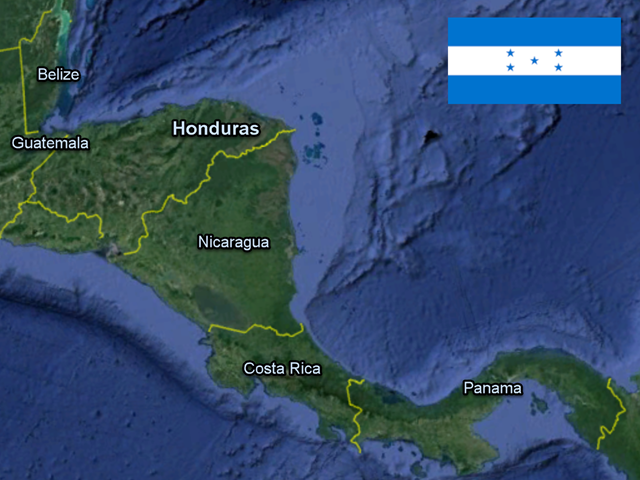
Geography Report: Honduras and the Bay Islands

Basic Facts

Capital: Tegucigalpa is the capital and largest city of Honduras. Roatan is the capital of the Department called Las Islas de la Bahia which includes the Swan Islands, Guanaja, Roatan, Utila, and the Cayos Cochinos.

People/Customs: The population of Honduras is 9,112,867 while the Bay Islands’ population is 65,932. There are many different people groups living in Honduras, such as the indigenous Chortí, the Copán, the Lenca, the Jicaque, the Pech, the Tawahka, and the Miskitos of the coast, which have a mixed heritage including British and African. There are the mestizos, of mixed Spanish and Indian descent, and the Garifuna, descendants of a tribe of black Caribs from St. Vincent which was transported here 200 years ago. Most of the population practices Catholicism, but several protestant denominations can also be found in Honduras and the Bay Islands, including Anglican, Pentecostal, and Seventh-Day Adventist.

Language: The official language of Honduras is Spanish, although English is spoken in the Bay Islands, because they once belonged to Great Britain. An English Creole is also spoken in the islands.

Climate: Honduras is both tropical and mountainous, and has a wet and dry season. Wet season coincides with hurricane season (June 1-November 30). The Bay Islands enjoy the cooling effects of the trade-winds.

Food/Farming: Typical Honduran food consists of rice and beans, corn tortillas, chicken, beef, pork, or fish, cabbage, and Conch soup. Many tropical fruits are grown in Honduras for consumption and export: bananas, mangoes, melons, pineapples, papayas, and citrus fruits. Coffee is grown at high altitudes on the mainland.

Government: Honduras has a democratic republic with three branches of government, many political parties, and an elected president.

Currency: The currency is Lempira. 1 USD=23 Lempira. The currency “Lempira” is named after one of the native heroes. When the Spanish found that they could not defeat the Indian chief Lempira, they raised the white flag, and invited him to sign a peace treaty, but when he entered the conference room the Spanish leader shot him, which led to the defeat of the native armies.

Art/Music/Culture: The culture of Honduras and the Bay Islands is influenced not only by the native and Latino peoples, but also by the African slaves, Spanish rulers, British invaders, Cayman fishermen, and American fruit companies. Popular music consists of merengue, calypso, salsa, punta, and Mexican ranchero. Hondurans love to play and watch soccer, or “futbol.”

History

Honduras was found by Christopher Columbus whose first stop was Guanaja (in the Bay Islands) in 1504. When Columbus ventured out of Guanaja he came to Punta Caxinas on the mainland, which he named Honduras, or “depths” in Spanish, for the deep water he found off-shore. In 1524, Gil Gonzalez Davila came to Honduras and Guatemala to make a small community near the mouth of the Rio Dulce. The next year, the Spanish settled on the northern coast of Trujillo and started to explore the central highlands where Comayagua was established. In 1570, the Spanish found gold and silver, and began shipping their treasure back to Spain; the treasure also drew pirates to the area, who were using a bay they called “Port Royal” (after the famous pirate port in Jamaica) to stage raids on passing ships. The Spanish also used Roatan as a shipping base.

Although the Spanish held the interior of Honduras, in 1572, after an appeal was made by the chiefs in the Miskito region, the British more or less took the coastal waters of Honduras, and a British protectorate was declared over the Bay Islands until 1859, when they were relinquished to Honduran control.

On the 15th of September 1821, Honduras declared its independence from Spain, and in 1822 Honduras declared loyalty to the Emperor of Mexico, Augustin de Iturbide. Later that same year, he was deposed and the five central American nations: Honduras, Guatemala, El Salvador, Costa Rica and Nicaragua, joined into the United Provinces of Central America. But in 1838, after many quarrels between the five nations ended the Federation, Honduras became a separate republic. Thus began a series of political changes which resulted in decades of instability. Between 1853 and 1860, an American named William Walker hired an army and made several attempts to take control over territory in Central America and lower California. He had a few successes, declaring himself President of Sonora, Mexico and Emperor of Nicaragua, but was always driven out and he was eventually caught by the British and executed in Trujillo, Honduras.

In 1888, the first rail-road was built in Honduras; it ran from the Caribbean coast to a town named San Pedro Sula which grew to be the second-largest city and main industrial center of Honduras. At the beginning of the 1900s, three large American fruit companies (United Fruit, Standard Fruit, and Cuyamel Fruit) bought up about 75 percent of Honduras’s banana plantations and exported fruit back to the United States. The remaining 25 percent, smaller plantations, were either bought out or forced out of business. Because 60 percent of the exports were bananas, this gave great economic and political power to a few foreign “invaders” and Honduras became known as the “Banana Republic.”

Honduras in the 20th century has been characterized by violence due to government corruption, political unrest, border disputes, crime, and gang warfare. For example, in 1969, El Salvador invaded Honduras during a border dispute which is now known as the Football War, because the conflict became violent during the World Cup qualifying matches between the two countries. Honduras was a staging area for the United States during their involvement in Nicaragua during the Iran-Contra affair of the 1980s. While violence and crime on the mainland made it unsafe for tourists, the Bay Islands enjoyed relative safety, and developed their diving industry and built beach resorts so that today they are a popular tourist destination.

In October of 1998, Hurricane Mitch devastated Honduras and the Bay Islands. Three days of torrential rain caused continuous landslides and floods that buried several towns and destroyed about 100 bridges throughout the country. Mitch was said to have killed 13,000 people in the whole of central America. Today, you can still see evidence of Mitch’s destructive forces on the landscape, though the country has largely recovered.

Land forms/Flora and Fauna

Honduras has several habitat zones, including mangrove islands along the coast, rain forests,  cloud forests, and tropical dry forests. There are many colorful bird species, including parrots and macaws (guacamaya). Animals such as jaguars, panthers, many species of monkeys, tapirs, and reptiles like snakes and iguanas can be found in Honduras. Underwater one will find coral reefs with many varieties of tropical fish, reef sharks, nurse sharks, and rays, and just offshore whale sharks can be spotted feeding on plankton.

Things to Do

Here is a list of fun things to do in Honduras: white-water rafting in the Rio Cangrejal, ziplining in La Campa, camping or hiking on Pico Bonito (the tallest peak in Honduras), and horseback riding in the forests. In the Bay Islands, there are beaches, coral reefs, hiking to waterfalls in Guanaja, scuba diving or fishing in Roatan, and freediving or swimming with whale sharks in Utila.

Bibliography    

Pavlidis, Stephen J. “Honduras.” A Cruising Guide to the Northwestern Caribbean. Seaworthy Publications, Cocoa Beach Florida, 2014.

“Honduras.”  www.CentralAmerica.com . May 2018.

“The Culture of Honduras” from Countries and Their Cultures. http://www.everyculture.com/Ge-It/Honduras.html . May 2018.


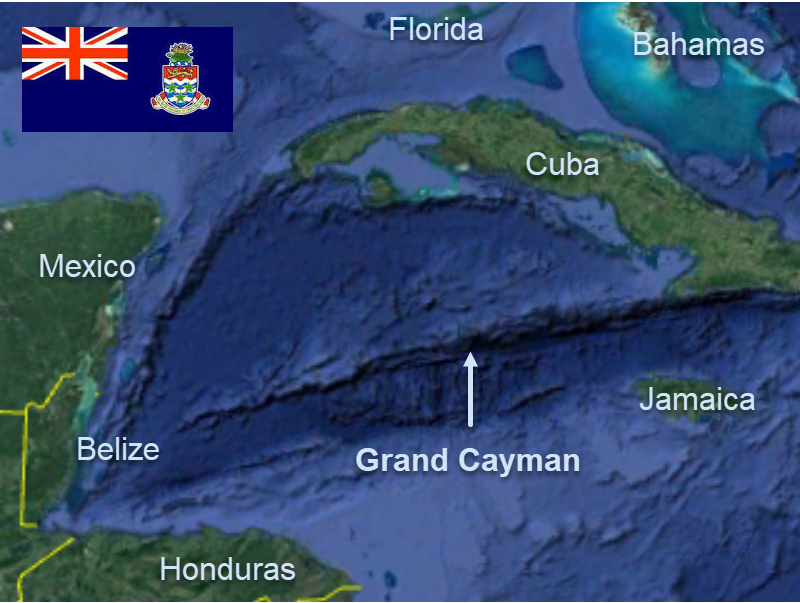
Geography Report: Cayman Islands

Basic Facts

Capital: George Town, Grand Cayman.

People/Customs: The population is about 61,000.  At the beginning of the 19th century, the Cayman Islands had a population of only 900 people, most of which were slaves. Today, there are still many descendants of those slaves, as well as an international community brought here by the banking and tourism industries.

Language: The official language is English.

Climate: There is a dry season (winter/spring) and a wet season (summer/fall) and is in the hurricane belt (hurricane season is June 1 to November 30). Temperatures average in the mid-80s (Fahrenheit) all year.

Food/Farming: The Cayman Islands’ traditional foods are fish and other seafood, turtle meat, goat stew, a fish stew called “rundown,” rice-and-beans, and gingerbread. They grow many topical fruits and vegetables: tomatoes, peppers, squash, callaloo, bananas, pineapples, breadfruit, papaya, and mango.

Government: The Cayman Islands have a Governor appointed by Great Britain and a local government of elected lawmakers. They are a British Overseas Territory under the rule of the Crown.

Currency: The currency is the CI Dollar, about 20 cents more than a U.S. Dollar.

Art/Music/Culture: The Cayman culture is always changing because of the influx of people from all around the world, however, one thing remains constant: everyone spends time in and around the water. On Easter weekend it’s traditional to camp on the beach, on November 8th the Caymanians celebrate Pirates’ Week to commemorate the pirates in their history, and there are many fishing tournaments throughout the year. On the Island there are Baptist, Catholic, Church of God, Presbyterian and Seventh-Day Adventist churches. Everything is closed on Sunday in observance of the Sabbath. Local artisans carve jewelry out of a special stone called Caymanite, which is only found in the Cayman Islands. The music has both African and European roots, with heavy influence from Jamaica and Cuba.

History

The Cayman Islands were found by Christopher Columbus in 1503 on his way to Hispaniola from Panama. His ships were blown off course and landed in the Cayman Islands. For centuries, the Cayman Islands were used as a supply-stop for Spanish sailors, explorers, and English privateers (and other pirates), looking for fresh water and turtle meat. The islands went through many name changes, but finally came to be known for the crocodiles which lived there, called “caymanas” by the Caribs. The Cayman Islands were not largely inhabited until the 17th   century, when they came under British control. In 1655, Jamaica was taken from the Spanish by Oliver Cromwell’s army, but the Caymans were not officially British until a treaty was signed in 1670. Slaves were imported and settlements thrived. In the 1700s, Sir Henry Morgan, Blackbeard, and other pirates are said to have buried Spanish gold on the islands, but it has not been found.

By the beginning of the 19th century, sailors started to venture to Jamaica for trading in Cayman-built ships. After the slaves were freed by the English in 1834, they settled in Grand Cayman and fished and turtled for a living. For the next one hundred years the islands stayed relatively isolated, though annexed to Jamaica. By the 20th century, the Cayman Islands were mostly settled, and the first cruise ship came to Grand Cayman in 1937, the same year the first booklet for tourists was published. In the 1950s and 60s, the first major hotels, resorts, and an airport were built, and the islands became known as a diving and beach destination. Jamaica became independent in 1962, but the Cayman Islands decided to remain a Crown Colony.

Throughout Cayman’s history, the islands have experienced many tropical storms, but on September 11, 2004, when hurricane Ivan hit the Cayman Islands, it was devastating. The winds gusted up to 200 mph and created a storm surge of 30 feet. Much of Grand Cayman was submerged, but Cayman Brac and Little Cayman escaped with little damage. The islands have recovered, and they are still known as an international banking center and a beautiful vacation destination.

 Land forms/Flora and Fauna

The Cayman Islands are made of coral limestone, part of the Cayman ridge at the edge of the Cayman trench, located in the northwest Caribbean just south of Cuba. Cayman also has two sister islands, Little Cayman and Cayman Brac, both of which are made of coral and are mostly flat other than Cayman Brac’s east bluff which rises to 141 feet. The total land area is about 100 square miles. Plants on the island include tropical hardwoods, fruit trees, orchids, thatch palms, coconut palms, casuarina pines, tropical flowers, and mangroves. Blue iguanas and the Grand Cayman parrots are indigenous to the islands. They also have green iguanas, sea turtles, tropical fish, and sting rays. Despite the name of the islands, the caimans that once lived here were hunted to extinction.

 Things to Do

Swim with stingrays at Stingray Ciity, dive the Kittiwake wreck, go horseback riding on the beach,  skate at the Black Pearl (the largest skate park in the Western Hemisphere), go to Star Fish Beach or Seven Mile Beach, hike the Mastic Trail, walk around the Queen Elizabeth II Botanical Garden and see the blue iguanas, snorkel with turtles at the Cayman Turtle Center, go deep-sea fishing, and take a night kayak tour in bioluminescent bays.

Bibliography:

Boxall, Joanna and Charles Grover, editors. Explore Cayman. Acorn Publishing, 2018.

Pavlidis, Stephen J.  A Cruising Guide to The Northwest Caribbean. Seaworthy Publications, 2014.

More Information about the Cayman Islands can be found at https://www.cayman.com.ky


A Trip to Panama City

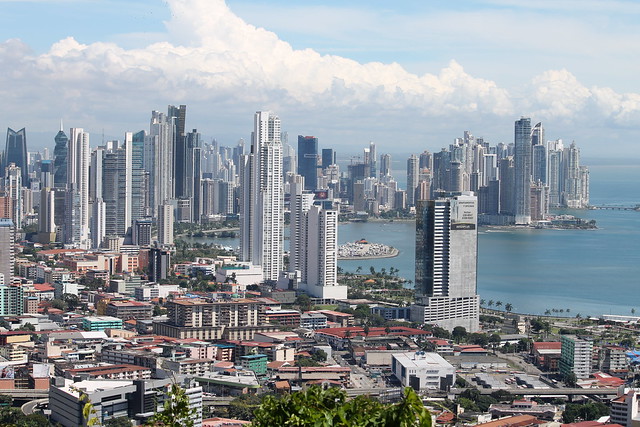
Panama City, Panama

We had been planning to go to Panama City for a long time, and we were finally able to make the trip in November. We took a taxi to the train station in Colón, but it turned out that it was a Panamanian holiday and the train did not run that day, so we had to take the bus. When I heard this news, I imagined a “chicken bus,” crammed full of people and animals, speeding down winding mountain roads. But the bus was not at all what I had imagined. It was big, with comfortable, spacious seats, so that even though the bus filled up, you couldn’t really tell. It was air-conditioned—a little too air-conditioned, actually, and the road and driver were reasonably good. It took about 2 1/2 hours to get to Le Meridien, our hotel, including traffic and taxi rides. When we checked in it was about 6:00 p.m. and already dark. We went up to our adjoining rooms on the fourth floor and decided to have Papa John’s deliver pizza. After we ate the pizza on the sixth-floor terrace, we went back to our rooms, called the day a success (other than the not-train-ride) and went to bed.

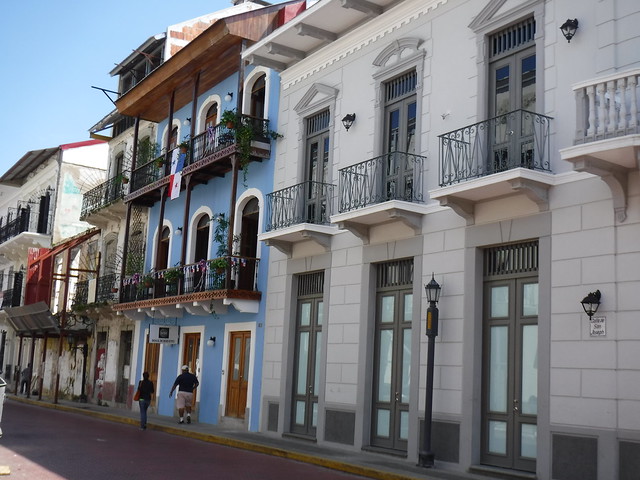
Casco Antiguo

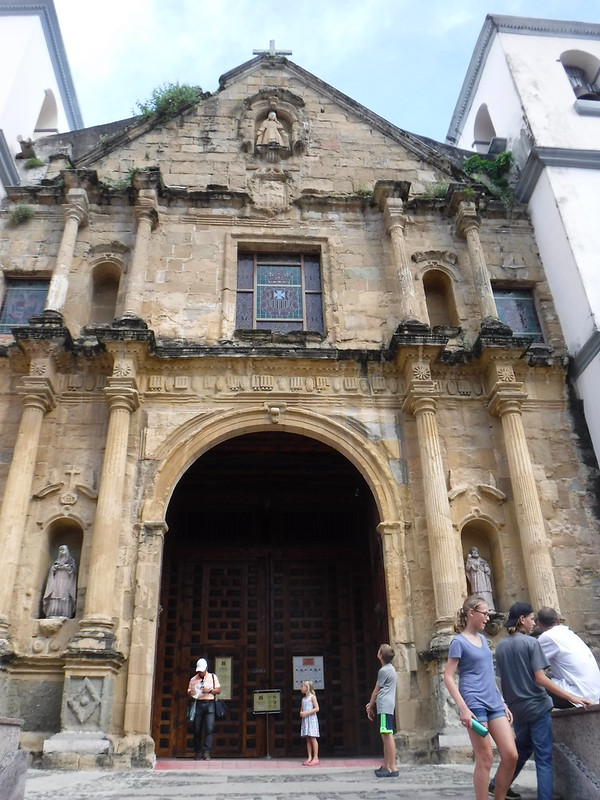
The next morning, we decided to go downstairs and across the street to a small café for breakfast. After we ate, a taxi driver named Ariel took us to the museum of the History of the Panama Canal in Casco Antiguo, the old city. When we left the museum, it was about 11:00 or 12:00 o’clock, so we walked around town to just look around and see what’s what. We stopped for cold drinks, then found the Iglesia de La Merced, a 17th century Catholic church which had been moved stone by stone to its present location (it had not been burned when the pirate Henry Morgan set fire to Panama City). Then we walked around for another half hour or so, and found a restaurant called Pip’s. The food was good, but the service was not great (as in not getting exactly what we ordered). We called Ariel to take us back to the hotel. It was about 5:30 when we got back. Mom and Dad went out on a date while we kids watched a movie and went to bed.

Casco Antiguo

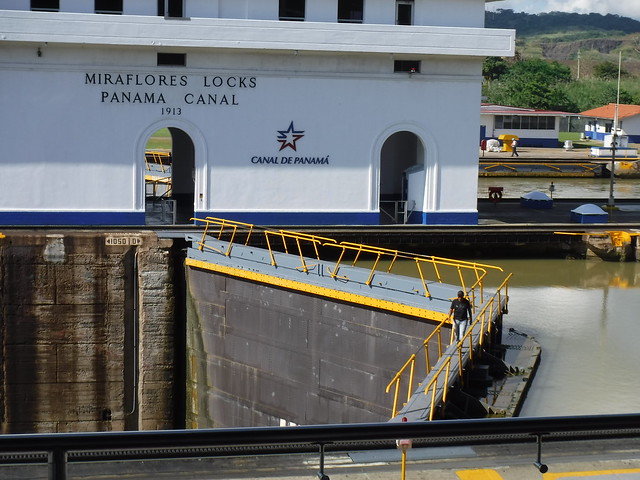
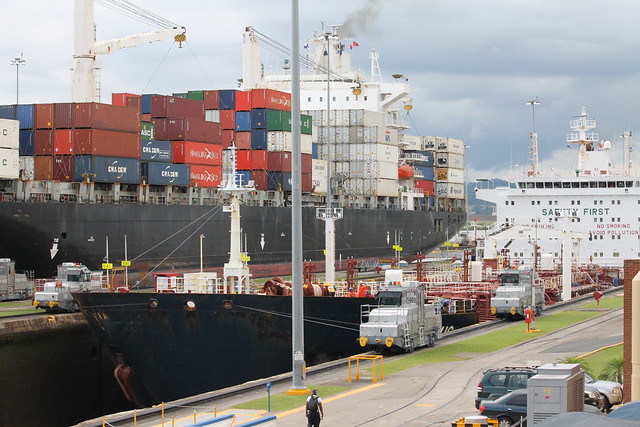
The next morning, we called a driver named Luis (a very nice guy) to take us in his van on a city tour. He took us to breakfast at a local place, called El Trapiche, then to see the canal locks, Ancon Hill, Flamenco Island, and the Baha’i Temple. At the Mira Flores Locks, we went to the visitor’s center and the observation deck to see a container ship exit the locks on the Pacific side. In the visitor’s center, there are exhibits and artifacts about the history of the canal.

Panama Canal

Panama Canal

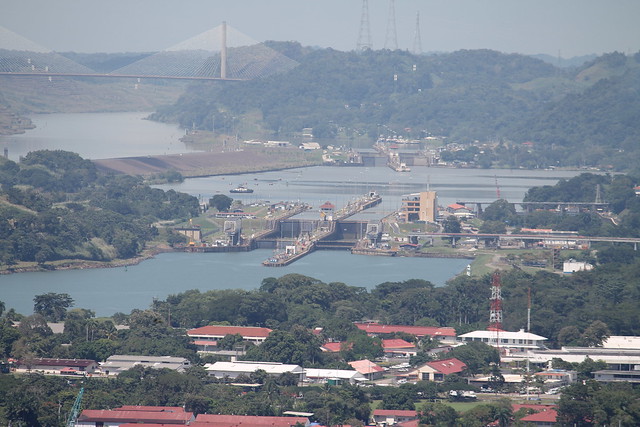
Ancon Hill was the site of the old Canal Hospital, but now it is a nature hike with a great view. It was a 45-minute hike to the top, but the view was more than worth it.

Panama Canal

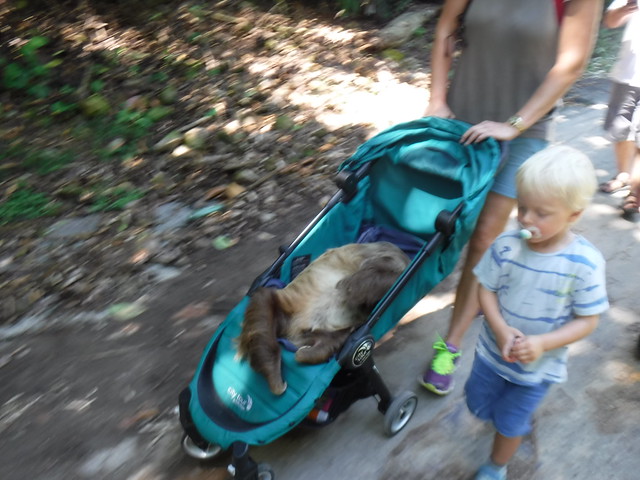
As we were walking down, we found an injured sloth that had fallen out of a tree. Luis picked it up and carried it, until a family with a toddler let us borrow their stroller. The little boy gladly gave up his stroller to save the sloth! At the bottom of the hill, we loaded the sloth into the van and gave the stroller back to the family. Next, Luis drove to the Smithsonian Institute on Flamenco Island to see if they could take care of the sloth. They sent us to the National Park, where we dropped it off.

Sloth Rescue Squad

We stopped for lunch, then Luis took us to the Ba’hai temple outside of the city on a tall hill, where we got another great view of the city. We returned to the hotel around 5 o’clock to rest before dinner. We then took two taxis to Pomodoro, an Italian restaurant. We had been told to watch out for Panamanian taxi drivers because they always get lost, and both drivers had to stop for directions to find our restaurant! It all ended well, and the next day would be our last in the city.

We all woke up the next morning to the sun shining through the big glass windows around 7:00 a.m. We called Luis to take us to the mall to do some shopping before we left the city. We were planning to stay for several hours to find what we needed, so we wandered around until we found a Conway department store. We spent a couple of hours there, looking for clothes and shoes, then headed toward the food court. We found a music store, then had some lunch (Wendy’s and Subway). After lunch, Dad, Rachel, and I took a taxi back to the hotel because we had what we needed and didn’t want to wander around all day.

I cannot tell you about any of the other events that day because I was not there, so I will skip right to dinner. We walked around the city near our hotel (in the rain) until we found a restaurant called “The Ozone Café,” which served dishes from many countries of the world. It was very interesting and delicious. When we got back to the hotel, we packed our bags and prepared for the return trip in the morning.

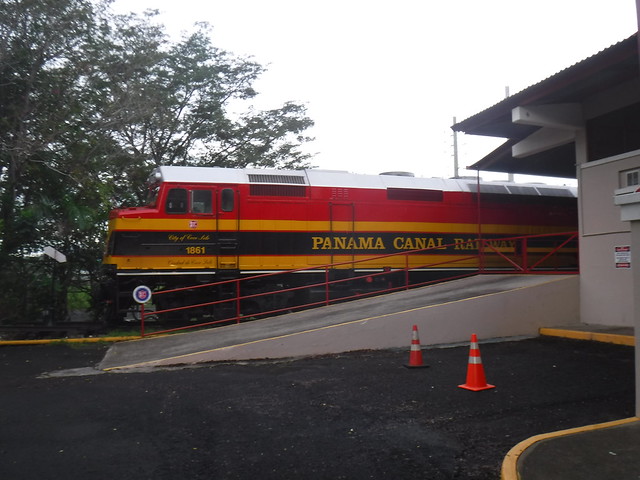
Panama Canal Railway

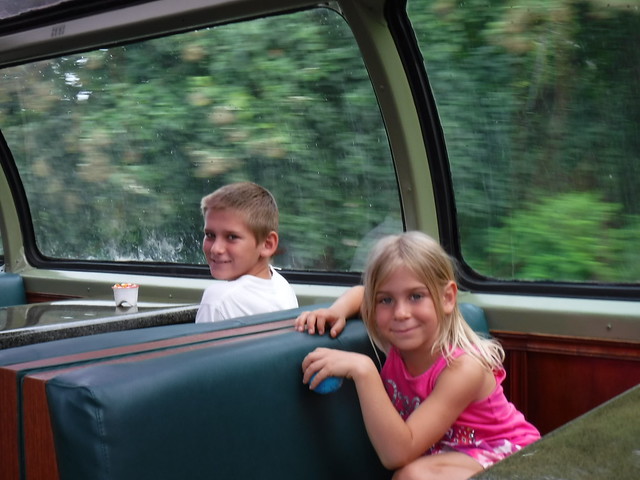
The next morning, we got up at 5:30 a.m. to meet Luis, who drove us to the train station and we got there just in time for the morning train to Colón. We boarded the train and were on our way. We sat in the observation car, which had a glass dome, and had snacks. As the train moved along, we got glimpses of the canal locks, and ships in Lake Gatun. When we got back to Colón we took a taxi back to the marina and got there around 9 o’clock. I think the trip was a success and that we made some good memories.

Panama Canal Railway

Geography Report: Costa Rica

Basic Facts

Capital: San Jose

People/Customs: Population is about 4.9 million. Most Costa Ricans, or “Ticos,” are mestizo, descended from Spanish settlers and natives, but Costa Rica is a multi-ethnic country. There are still some indigenous tribes living in Costa Rica.

Language: Spanish is the official language; local dialects are also spoken, like Bribri, Patois, and Mekatelyu.

Climate: Costa Rica has a tropical climate with two distinct seasons: dry season (December to April), and rainy season (May to November), temperature and precipitation are affected by elevation and two bodies of water, the Pacific Ocean and the Caribbean Sea.

Food/Farming: Costa Rica’s most important crop is coffee. There are also large rice, banana, and sugarcane plantations. Costa Rica also produces cattle for beef and dairy, poultry and eggs, teak wood, beans, palm oil, oranges, mangoes, pineapples, and other fruits and vegetables. A typical Costa Rican meal, or “casada tipica,” consists of meat or chicken, rice and beans, tortillas, salad or roasted vegetable, and fried plantains.

Government: Costa Rica is a democratic republic with a constitution defining three branches of government. The current president is Luis Guillermo Solis.

Currency: Costa Rican Colόn, or CRC. It takes 573 CRCs to make $1 USD.

Art/Music/Culture: Costa Ricans usually learn to dance at an early age. Merengue, salsa, cumbia and dub are the four main Costa Rican dances in addition to traditional folk dancing with costumes. Over time, Spanish beats mixed with the indigenous tunes and made a new kind of music special to Costa Rica. Local artisans produce crafts like decorative oxcarts, wooden carvings, pottery, leather work, and jewelry. Holidays celebrated in Costa Rica include: Christmas, New Year’s Day, Easter and Holy Week, Fiesta de Los Diablitos, Independence Day on September 15, and Labor Day on May 1.

History

Before Christopher Columbus came to Costa Rica in 1502, there were hundreds of thousands of natives from different tribes. There is archaeological evidence that they traded with other tribes in the lands of North Central America and South America. When Columbus “discovered” Costa Rica, he was on his fourth trip to the New World. He confronted a hurricane, was blown off course, and landed in Costa Rica. He traded with the natives and claimed to see more gold in 2 days than he had in 4 years on Hispaniola–that is how Costa Rica, or “Rich Coast,” got is lasting name. It became a Spanish Colony in the 1560s, but San Jose was not established until 1737. By then, the Indian population had been all but destroyed by disease and hard labor, and only a few tribes survived in the jungle.

For the Spanish, Costa Rica did not live up to its name because its wealth is in the cultivation of the rich volcanic soil and not in mined minerals. Costa Rica’s history is also unique in the Caribbean because it never had a slave-based economy. Instead, smaller self-sufficient farms of the Central Valley became the precursor to a rural democracy. However, as in all the other Spanish colonies, society was ruled by men, with power being held by white landowners and the Catholic Church.

Spain ruled Costa Rica until September 15, 1821, when they became independent. Costa Rica separated from Spain peacefully, but without Spanish control, conflicts inside the country arose, leading to a short civil war. The Liberals gained control, moved the capital to San Jose, and joined the CAF, Central American Federation. In 1824, the Nicoya-Guanacaste province left Nicaragua and joined Costa Rica. While other Central American countries struggled with long, bloody civil wars, Costa Rica remained relatively peaceful and was able to focus on agriculture and infrastructure.

When it was discovered that the highlands of the Central Valley were perfect for growing coffee, the government subsidized the planting of saplings. By the mid-1800s, Costa Rica was growing and processing coffee for European markets. By the century’s end, coffee represented 90% of the country’s exports. The coffee processors, rather than plantation owners, became the country’s ruling elite.

In 1890, the first railroad was completed by an American railroad man, Minor Keith, in order to transport coffee to the coast. He planted banana plants along the tracks, which he eventually began export to the United States. The fruit became so popular that by the end of the 1900s, banana exports surpassed coffee, and Costa Rica became the world’s top banana producer. Banana money bought power—the United Fruit company controlled local politics and communications. But in 1913 a disease struck the banana plantations and ended the powerful monopoly.

Despite following the normal Central American pattern of dictatorship and civil war in the first half of the 20th century, Costa Rican leader Jose Figueres Ferrar established the world’s first unarmed democracy (meaning Costa Rica has no military) in 1949. Costa Rica got dragged into the conflicts with the United States and Nicaragua in the 1970s, but the elections of 1984 reaffirmed their commitment to peace. President Oscar Arias later won the Nobel Peace Prize for his role in negotiating a peace plan which ended the conflicts.

After the rise and fall of coffee and bananas, the most valuable resource of Costa Rica turned out to be the wilderness itself. Starting with a nature conservation area in 1963, the “Green Economic Revolution” began with a few tourists coming to see the rainforest, but now about one-third of Costa Rica’s land is preserved as nature reserves, wildlife refuges, and national parks. It has a successful tourism-based economy, with people coming from all around the world to enjoy the natural beauty the country has to offer.

Land forms/Flora and Fauna

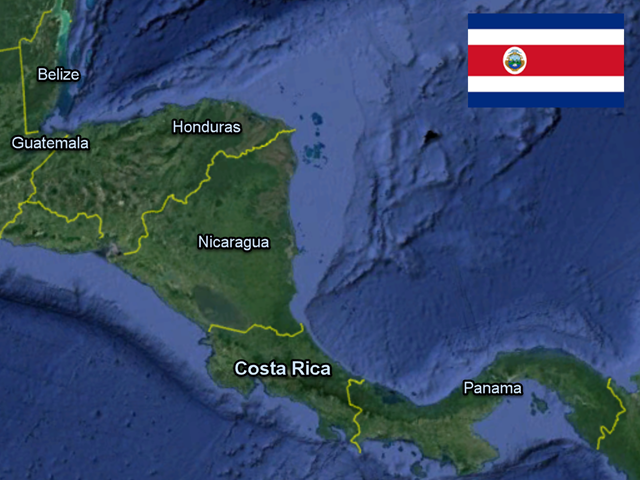
Costa Rica is bordered by Nicaragua to the north, Panama to the southeast, the Pacific Ocean to the west, and the Caribbean Sea to the east. Costa Rica has 51,060 square kilometers (19,714 square miles). It has cloud forests, mangrove wetland, rain forests, desert, beaches, pastureland, volcanic mountains, and coastal farmland (banana and pineapple plantations). It is known for its diverse flora and fauna. Native birds include: the Scarlet Macaw, toucans, hummingbirds, Magpie Jays, Quetzals, Blue-crowned Motmots, and Northern Jacanas. Some of the mammals are Spider monkeys, Howler monkeys, Squirrel monkeys, sloths, Pacific Spotted Dolphins, Pumas, Margays, Pygmy Anteaters, Capuchin monkeys, Tapirs, Jaguars, many species of bats, Humpback whales, and Coati. There are also Caimans, Jesus Lizards, Leatherback turtles, Eyelash Viper snakes, boa constrictors, and many species of frogs, as well as insects and arachnids like scorpions, tarantulas, Blue Morpho butterflies, stick bugs, and fireflies, to name a few.

Things to do

Surfing on the Pacific side (Guanacaste Province), ficus tree climbing in Monteverde, night walk in Monteverde Cloud Forest (Curicancha Reserve), white water rafting, kayaking in rivers or mangroves, coffee tour in the mountains, Arenal Volcano National Park (hanging bridges, hot springs, and ziplining), Bat Jungle in Monteverde, waterfall tours, horseback riding, nature hikes in Manuel Antonio National Park or Corcorvado National Park, and other wildlife tours and refuges.

Bibliography

McCarthy, Carolyn, and G. Benchwich, J. S. Brown, J. Hecht, T. Spurling, I. Stewart, L.Vidgen, and M. Voorhees. “Costa Rica,” Central America on a Shoestring. Lonely Planet Publications, 2013.

For more information, look at these websites:

https://www.costarica.com/travel/geography-of-costa-rica/

https://www.govisitcostarica.com/travelInfo/floraFauna.asp

https://www.lonelyplanet.com/costa-rica/history

Geography Report: Panamá

Editor’s Note: We welcome Sam as the new author of the Take Two Sailing Geography Reports!

Basic Facts

Capital: Panamá City

People/Customs: Population is 4.1 million, made up of mostly Mestizo and Native people groups, also some Afro-Panamanians, Mulattos, and Whites. Most people are Catholic, with some Protestants and a few indigenous religions.

Language: Spanish

Climate: Tropical, with a wet and dry season. The rainy season is in between May and December, and the Caribbean side gets twice as much rain as the Pacific side. Panamá lies outside of the hurricane belt. Average temperatures are between 75°F and 86°F, though it is significantly cooler in the mountains.

Food/Farming: Fish, Beef, Pork, Chicken and Eggs are produced here. Corn, rice, and bread are popular staples, and a large variety of tropical fruits and vegetables, such as mangoes, citrus, passion fruit, pineapples, bananas, and plantains are grown in Panamá.

Government: Constitutional Republic with a President and a National Assembly.

Currency: the Balboa, equivalent to, and interchangeable with, the U.S. Dollar

Art/Music/Culture: The music and culture is influenced by a mixture of Indigenous, Spanish, and African traditions. The Guna people sew a kind of colorful quilted art called molas. A Christmas parade is held in the capital every December 25th with people dancing in traditional costumes, and Carnival is held in February with loud music, elaborate costumes, and parades.

History

In 1501, Panamá was discovered by a Spanish explorer named Rodrigo de Bastides. Until his death in 1506, Christopher Colombus governed the area stretching from Panama to Honduras. In 1513, the Spanish conquistador, Vasco Nuñez de Balboa, was the first European to see the Pacific Ocean. In 1519, a Spaniard named Pedro Arias de Avila founded the city of Panamá on the Pacific side. The Spanish used the isthmus for transporting gold looted from South America to ships headed for Spain.  In 1572, English privateer and explorer, Francis Drake, destroyed one of the first towns built in Panamá, and after he did this he sailed away with Spanish gold. In 1671, the buccaneer Sir Henry Morgan sailed up the Chagres River, looted, and destroyed the city of Panamá. The city was rebuilt, but there was no way to stop pirates from taking Spanish gold. In 1739, Admiral Edward Vernon destroyed the fortress of Portobelo, so the Spanish decided to sail all the way around South America rather than carrying their gold across the isthmus.

Spain lost nearly all of its colonial possessions in the 18th century in the Napoleonic Wars, and Panama won its independence from Spain in 1821 as part of Gran Colombia, liberated by Simón Bolivar. In 1846, the U.S. was granted permission to build a railroad across Panamá, which grew wealthy from people traveling across the isthmus. In 1881, the French tried to build a sea-level canal across Panamá, but the mosquitos and rainy season made this impossible.

The United States, in a bid to get control of the project, helped Panamá fight against Colombia for its independence in 1903. In exchange, they would build the canal. They tried a new strategy, building locks, damming a river, and using a lake to get across. In 1914, the Panamá Canal was finished, and the first ship sailed through—they had succeeded in building a passage that connected the Atlantic and Pacific Oceans, making trade and shipping much easier. The United States controlled the Canal completely until the 1970’s, collecting concessions and using the strip of land on either side as a military base.

After the death of the leader General Omar Torrijos in 1981, military leader Manuel Antonio Noriega took control of the Panamanian government and formed a dictatorship, declaring himself president and growing the military. He was accused of corruption and doing business with Colombian cocaine cartels, killing his opponents, and rigging elections. In 1989, he re-elected himself, and the first thing he did was to declare war on the U.S., who had imposed economic sanctions and refused to pay canal fees. Of course, the U.S. won in a very short time, and Noriega was captured, tried, and sentenced on conspiracy charges. He was flown to Florida to spend decades in jail.

Meanwhile, resistance to U.S. control of the canal had grown, and the conflicts sometimes grew violent. After a series of treaties in the 1970’s and 1980’s, the United States ceded complete control of the Canal to the Panamanians in 1999. Also, in 1999, the first female Panamanian president, Mireya Moscoso was elected. Noriega did not return to Panamá until 2011.

Today, Panamá is exporting tropical fruit and building its tourism industry, attracting people from all over the world to its beautiful islands, beaches, mountains, and national parks, and is continuing to profit from the ships that transit the Panamá Canal. A new set of larger locks were finished in 2016.

Land forms/Flora and Fauna

Panamá is an isthmus, a land bridge that connects North America to South America. There is a 50-mile canal across the middle section. Panamá is about 35 miles wide at its narrowest point. Tropical forest covers fifty percent of Panamá. Mangrove swamps line the coasts, and the interior has mountains, the tallest of which is Volcan Barú at 11,4oo feet. Aside from tropical plants like palm, mangrove, banyan/fig, banana, papaya, and breadfruit, the mountains have deciduous trees like oak and elm, many varieties of epiphyte, fern, and moss. Animals you might find in Panamá include pumas, jaguars, tapirs, anteaters, agoutis (and other large rodents), coatis, peccaries, armadillos, sloths, spider monkeys, howler monkeys, and capuchins, poison dart frogs, boa constrictors, and tropical birds like the three-wattled bellbirds, quetzals, toucans, parrots, hummingbirds, woodpeckers, and sea birds like tropicbirds and frigates.

Things to do

White-water rafting, climbing, going to beaches, ziplining, surfing, hiking in the mountains, visiting the Panamá Canal, snorkeling and SCUBA diving, fishing, taking a helicopter tour, horseback riding, and sailing to the San Blas Islands.

Bibliography

“Panama.” Random House World Atlas and Encyclopedia. New York, NY: Random House Reference, 2007.

“Panamá History.” Lonely Planet Travel Information,  http://www.lonelyplanet.com/panama/history, March 27, 2017.


Fun in Bonaire

On December 5th, our new friend Cliff took us to explore some caves on Bonaire to celebrate Sky’s 11th birthday (s/v Abby Singer). For the first cave, we had to climb down a ladder, crawl through a tunnel, and then we could stand up. It was hot, and the oxygen was low because it was so far back in the cave. You could go back even further, but we were not allowed to. When we turned all the lights off it felt like we were blind, then when we climbed out, it seemed so bright!

Caving in Bonaire

Before we got in the truck, we saw a wild parrot; it was very pretty. The next cave was a tunnel with bats and a very small exit.

Caving in Bonaire

The third cave was the cave with the swimming. We climbed down into the cave, but when we got to the water we could barely see it, it was so still and clear. We snorkeled into the first chamber using dive flashlights to see, but to get to the other chamber in the cave, we had to swim about 4 ft. down and 12 ft. forward. When we got to the other side, there were more rocks and stalactites, and there was an underwater pit that we could swim down into.

Caving in Bonaire

After the caves, we went to the windsurfing beach at Lac Bay. We got burgers at the beach bar, then rented windsurf boards.

Windsurfing in Bonaire

The day ended with panini and gelato at Luciano’s. It was a lot of fun and I had a great day.

Big Papa with Sky

Cliff “Big Papa” with Sky