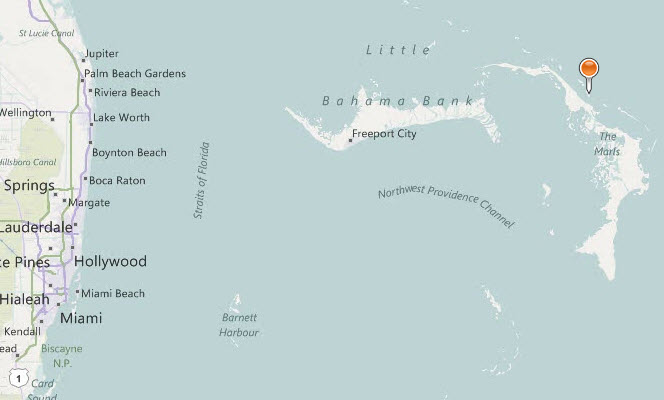
Hope Town

So far our favorite settlement in the Abacos is Hope Town. For me, it was the grocery store and coffee house that did it. After searching for healthy foods in small shops on every island, I found things like brown rice, whole wheat flour and even (my favorite from home) Springer Mountain chicken (a roaster was $20, but compared to eating out, that’s not bad). I made it on a day when the ship had just come in and found fresh produce. Best of all, Harbor View Groceries is right on the water, so I can pull my dinghy up to their dock and load up easily. I went for a bike ride and got to see a lot of the area. I found the coffee shop in an old house that had been beautifully renovated, so I stopped for refreshments. It has a beautiful view of the candy-striped lighthouse on the other side of the island, and their menu rivaled any Starbucks.

For the kids, it was the park, complete with a newly-built playground, climbing tree, and lots of other playmates. Within minutes of arrival on shore, the older two were involved in a game of tag with local boys and Sarah and Sam were on the tire swing. Jay went to scope out dinner joints and I just sat and chatted with other moms. They also liked the Sugar Shack, where we had ice cream after dinner, a rare treat.

Although there was no large hardware store (like in Marsh Harbor), Jay also liked the feel of Hope Town. If we go back to spend more time there, I think we would anchor outside the harbor, so we could have a little more privacy (and a great place to swim) with the benefits of civilization just up the channel.

Anchor Light Replacement

Eli changed a bulb at the top of the mast yesterday.  We’re now on our third Dr. LED anchor light.  I’m about ready to give them up.  Not just because they’re $50 a pop, but I alsodon’t particularly enjoy the ride to the top of the mast. 

Eli does. 
He’s our climber, and was excited that I’d let him go up.  We’ve tried projects aloft before, but onceat the top he hasn’t been able to get the job done.  This time he did though, while I stood ondeck wringing my hands that he might drop something.  I’m proud of him. 
He did only change a light bulb, but he wasable to do a chore for me that I didn’t want to do myself, and he succeeded where he had previously failed.  I long for the day when the kids are able tohelp more. 

If this bulb fails, we'll goback to an incandescent bulb in the short term and then maybe try an LED from
Bebi Electronics.

Exploring the Abacos

This is a brief overview of our trip so far:

Day 1: In transit, lovely sail through the night.

Day 2: Arrival on the Bahama Banks, quick (cold) swim. Spent the night somewhere in the middle of a shallow, watery desert.

Day 3: Motored through glassy seas, greeted up close by dolphins. Arrival at Great Sale Cay, explored by dinghy and spent the night.

Day 4: Wild and wonderful sail all the way to Green Turtle Cay. Double reef in the main, 20-25 knots of wind. Often 8-9 knots of boat speed. Listened to loud music and generally had fun.

Days 5-8: Checked in with Bahamian official and explored Green Turtle Cay by dinghy and on foot. Found a great little grocery store (Sid’s) and met Sid and Martha, proprietors. Went to the museum and sculpture garden; got a different perspective on the American Revolution as settlements here were established by loyalists who sided with King George instead of George Washington. Had ice cream and bought our first loaf of Bahamian coconut bread (yum!). Walked to the Atlantic side and found beautiful beaches with unusual shells and sea life (star fish, conch and sea cucumber among the finds.)

Days 9-11: Move to Great Guana Cay, north end. Disappointed to find mega-yacht in man-made cove and big construction projects on pristine beach. Very pleased to find small, uninhabited island with good beach, tide pools full of sea life, and nice hiking for small explorers. Snorkeling on reefs on the Atlantic side—the best we’ve ever experienced. Thanksgiving Day spent playing in water and on beach, eating turkey and having family movie night.

Days 10-12: Investigated Marsh Harbor. Found coin laundry—perfect for washing the comforter soiled by seasick cat. Appointment with Dr. Minnis, O.B., and got ultrasound of new baby girl. Jay found a great hardware store, but Tanya ran out of time for re-provisioning at big grocery store. Went to Curly-Tails Restaurant and ate great sea food (but lousy steak).

Days 13-14: Move to Man-O-War Cay to check out protected harbor. Decide it’s too crowded, but kids had fun playing in ocean waves on Atlantic side. Successful shop at grocery store on Monday—right on the water so the groceries went straight into the dinghy. Cool. Moved the boat to more protected anchorage to the north. Rest of the day rainy and windy, excellent for movies and baking cookies. Kids hoping for better weather so they can swim again. Me too.

FAQ: How do you receive phone calls?

I mentioned earlier that our US cell phones are forwarded to us here in the Bahamas.  We wanted to make it as simple as possible for people to get in touch with us.  Our cell numbers were already well known and we wanted to avoid changing our contact information.  We also wanted to avoid high international rates charged by most carriers, both for ourselves and ourcallers.  To meet these goals, we forwarded our US (Verizon) cell numbers to a US Skype number which is then forwarded to a Bahamian cell phone.  So far it is working very well.  Details can be read below for those interested.

[more]

Our cellular plans have plenty of minutes and forwarded calls count against them, but they also allow us to provide a set of numbers that are airtime-free and the Skype number is one of these.  The downside is that we are continuing to pay for a US cellular plan that we aren’t using.  If we had better planned ahead we could have “ported” our cellular numbers to Google Voice, which could forward those calls to Skype for free, and we could have then suspended the cellular plans.  Oh well.  I'm also the guy paying $10/month for Tanya's old email address from an ISP we haven't used in (best guess) 11 years.

The Skype number costs $18 for 3 months.  Calls to it can be answered anywhere in the world with a Skype “phone”, which is generally an Internet-connected computer, though other devices do exist.  We usually have Internet access to some degree.  I use it for work, we use it for email, news, weather, etc.  But since we are often hitting Wi-Fi hotspots that are miles away it is seldom good enough for Skype, and we have never been fans of VoIP to begin with.  Local cellular networks offer better call quality and greater coverage area, so we bought a Bahamian SIM card for $15 and forwarded the Skype number to that.  

The Bahamas is one of those places where the caller pays for calls to mobile phones, so the phone only incurs costs when we make local calls from it.  But since we’re forwarding from Skype, we are the caller, and have to pay an international rate to boot.  Fortunately, this is what Skype does best and the rate is only 24¢/min.  Further, Skype has subscriptions that let you buy a block of minutes at a lower rate.  A block of 400 minutes to the Bahamas is only $14/month which drops the rate to 3.5¢/min.

Outgoing calls to the US are a little trickier.  Skype doesn’t currently have any facilities that would let us call the US cheap without using VoIP, and we certainly didn’t want to dial internationally from our Bahamas cell phone.  Initially we would call using Skype and struggle through the first few minutes of the call before asking the person to call us back.  Google, however, has a nifty callback feature that helps out here.  We can initiate a call via Google Voice on either the website or through an app on my US cell phone.  Google first calls us, then calls our party and connects us.  An Internet connection is required in either case, so we can’t initiate calls from remote areas.

We expect that this strategy will work equally well in other countries.

Sarah’s Prayer

She says she already knew that God answers prayer, because that’s how Eli got Sam for a baby brother. So she never doubted for a second that if she prayed for a sister, eventually she would get one. We had our 20-week ultrasound this afternoon at a clinic in Marsh Harbor, Abaco, Bahamas. The baby has a four-chambered heart, two-hemisphered brain, two legs and two arms, and all the organs are developing as expected. In fact, there is only one thing missing from this baby—a certain “extra” that is only given to baby boys.

That’s right—Sarah has gotten her wish for a baby sister. Until the end of April, there will be many a debate at dinner time over what to name the newest addition, but I think at this point we can cross off Tom, Dick or Harry. We may pick one boy name on the off-chance that the technician was wrong (she says the predictions are usually about 80% correct), but Sarah has her hopes up, and a smile on her face. She came with me to the clinic and was the first one to shout out, as the dinghy approached the anchored boat: “It’s a girl!”

I, for one, feel relieved to have accomplished the feat of finding an O.B. in this remote place, making an appointment (he only comes to Abaco Island from Nassau once or twice a month), finding the office and walking there, and getting the ultrasound done. I feel like I can now relax and enjoy myself more as the weight of that responsibility has been lifted. It is always a relief, as well, to hear that healthy heartbeat and to see that everything is going well inside there. What an incredible mystery! And what a privilege to be the bearer of a priceless gift—and an answered prayer, for my daughter.

Happy Thanksgiving

It was an unusual Thanksgiving here for us on Take Two. The food was traditional, but the surroundings were definitely different! This was the first year in as long as we could remember that we were far from family and close friends…you were all missed! Sarah helped with all the preparations, including a pumpkin and an apple pie, and beautiful decorations. All had a hand, though, as everyone was required to peel at least one potato if they wanted to eat!

We spent the day relaxing and preparing, but mostly relaxing. The kids were off school for the day, so they played while I baked. In the afternoon, Jay inflated the pull-toy. This was a new diversion, and a popular one at that. It looks like a giant covered inner tube with a long tow line. Jay would zoom out in the dinghy across the smooth, crystal clear water pulling one or two kids behind him. I sat on the beach under an umbrella and watched the fun from afar.

We are thankful for so much that it is hard to name just one or two things, but the big ones are life, family, the ability to pursue our dreams, and the amazing beauty we see around us. We, like the pilgrims, are thankful for another years’ “harvest,” as God has again provided Jay with the income it takes to fuel these adventures. He has brought us safely into this new place and with good health to enjoy it. Though they are far away, we know we have family who love and support us, and that is no small thing in this crazy world. Every day brings new wonders and surprises—and more for which to be thankful! We hope you all had a very Happy Thanksgiving, too!

FAQ: How do you do night watches?

Cruising aboard a sailboat entails very little actual sailing—mostly it’s getting to a destination as quickly as possible and then enjoying it as slowly as possible. Liza Copeland in her books about her family’s around-the-world travels estimated that they actually sailed only a years’ worth of days in their eight-year circumnavigation. Still, unless you’re just island-hopping or skipping down a coastline, eventually you’re going to have to make at least one overnight passage to get to your destination. Timing can be tricky. You want to arrive with enough daylight to navigate channels or around coral, and just generally to have enough time to get settled comfortably. So you have to guess how fast you’re going to go and then time your departure accordingly. But because wind speed and direction are subject to change, you may go faster or slower than you estimated.

Sometimes, for folks crossing the Gulf Stream, leaving at sunset and going all night makes sense. You have to have someone keeping watch at all hours, to keep an eye on sails, weather, passing ships, to listen to the VHF and to navigate. Since we’re always shorthanded, that means taking turns sleeping. Different couples have worked it out different ways. We are already experts at night watches. This may sound arrogant, since this is only our second overnight trip, but we’ve survived having four newborns and know how to function on very little sleep and pass like ships in the night (ha ha). Of course, so far, the weather has been pleasant and the autopilot and GPS do most of the work.

Here’s how it seems to work best.  Since I’m a night owl, and love star-gazing, I take the sunset-to-midnight shift. Night sailing is what drew me into this bizarre lifestyle to begin with (I’ve told the story in a previous entry). The stars, the bioluminescence in the water, and the rare solitude to me are a wonderful part of sailing. I can listen to music, read a book, write, or just think. My sailing-mom friend Vicki gave some good advice, which I have followed: set a “snooze alarm” on your watch, so that you look around the horizon at least every ten to fifteen minutes. That helps if I’m reading or otherwise distracted, or simply having a hard time keeping my eyes open. A bucket with a comfy “seat” in the cockpit helps, too; since I’m pregnant, I would be going below every fifteen minutes to use the head.

I get Jay’s pot of coffee ready and he takes over at midnight. I usually get up at 3:30 and have a snack and cup of tea. This is the dawn watch—another privilege, but also a practicality. Since I have to be up and available for the kids, it makes sense for me to take a short early morning watch and then catch a two-hour nap before I’m on duty as mom. Jay takes over at sunrise while I snooze, and then he does most of the sailing and navigating during the day. I am a good napper, so I can catch up on sleep in the afternoon.

All that said, I still don’t feel ready to cross an ocean with this young family of ours. A couple of days like this are a pleasurable break in routine—a chance to use my new laser pointer to show a kid a constellation at 4 AM, to play dominoes in the cockpit instead of correcting spelling, and to make easy, snack-y food instead of cooking regular meals. But for weeks on end? I’m sure you get used to the routines and a life at sea, but at present, I am satisfied to enjoy this time as a rarity and not a regularity!

Moving House

Typically, when people move, they pack up their belongings, load them into a truck and drive to the new house. They then unload their stuff, put it all away in the new location and get to know the neighbors. When we move house, we mean that our house is actually moving. “Packing up” has a different meaning for us. (Chiefly, it means packing every square inch of storage space with food and spare parts!)

One major difference between a catamaran and a monohull is basic stability. Catamarans want to be level, which is to say that they have a strong righting moment. To reach this balance, they may make shorter, jerkier movements than a monohull, but the end result is that they are a basically stable platform. My countertops don’t have fiddles, for example (the raised edges to keep things from sliding off.) That doesn’t mean things don’t slide, though. I’ve figured out through trial and error what must be put away and what I can leave out. (Cantaloupes have to be put away.) A monohull can spend hours, or days at a 30˚ angle or greater. They have things like gimbaled stoves and pot clamps. Not only do they heel, but they also roll. Their movement is often more rhythmic and predictable, though, so some people prefer them to cats for that reason.

How does this affect the house when it moves? If you live on a monohull, all the cabinets and lockers have locking mechanisms. Everything must be stowed carefully and locked away before leaving the dock or anchorage. If your boat is your house, this can be daunting. For us, although there is a place for everything, not everything is always in its place. If we want to go somewhere with our boat, though, we just make sure nothing is precariously balanced or poised to cause injury or damage. Then we go.

When we left Boot Key Harbor, the seas were a bit rowdy. I did more than one walk-through of the boat trying to make sure we had stowed anything that might become a projectile. I was pleased to see that the shelving Jay put in my pantry keeps my mason jars safe in pretty rough chop. We had neglected to completely stow everything in the cockpit and on deck, but after things calmed down a bit, we were able to do some last-minute tidying-up.

So now the house is moving. When we get to the next anchorage, we won’t have much unpacking to do, so we can skip straight to exploring and getting to know the new neighbors.

Green Turtle Cay, Abaco, Bahamas

We're in the Bahamas!  The trip from Florida was fantastic.  We successfully timed our trip so the mighty Gulf Stream was smooth as glass, but then we had lively sailing conditions in protected Bahamian waters.  We did a little exploring ashore today, but are generally catching up on rest and trying to figure out what to do next.

We have Internet access when we're near civilization (which hopefully isn't all the time).  Our US cell phones are forwarded to Skype, so that is available but we're not sure yet how well it will work.  Give it a try?

Marathon, FL to Abacos, Bahamas

We're in final preparations to leave Florida and head to the Bahamas.  We've been waiting for the weather to cooperate and finally see a window we like starting tomorrow. 

If I get to it, I'll update this post with more details about our expected route, anticipated weather, etc.  Our SPOT messenger will be on and our real-time track viewable on the Where Are We? page while we're underway and for a few days afterward.  My father is our emergency contact ashore.