What to Do (Or Not) in Washington D.C.

Homeschool friends have been asking me what we liked or did not like about our visit to D.C., so this is an overview/review of some of the many things we crossed off the “to do” list for a visit to our nation’s capital. (Look for place names in bold type.)

The good news is that you can still visit our nation’s capital by water. The bad news is that the whole waterfront area on the Washington Channel is under construction, to be finished in 2017. The Capital Yacht Club is a down-to-earth, friendly place that accepts transients and allows full access to their club, showers, laundry room, mail room, etc. They’ve moved from their original building (which has been torn down), but are back up and running with new floating docks just a few blocks south in a nice, although temporary, place, while they wait for the new yacht club to be built. It’s a great location; the Mall, Memorials, Metrorail stations, and shopping/dining are all just a few minutes’ walk from the waterfront. We’ll have to come back when it’s done—the drawings for the finished project look beautiful.

The Mall in D.C. is the most obvious destination—the center of all the action, and incidentally, the best place to play Frisbee. Beware, however, because distances are farther than they appear on the “official visitors map.” Lincoln Memorial to the Capitol? No problem, you might think. Or maybe hit a couple museums—they’re all next to each other, right? Add vast amounts of time and energy to the estimates because, let me tell you, there is a LOT of walking. The small person who had outgrown her backpack and stroller had to have a new just-for-D.C. umbrella stroller. There were very few playgrounds nearby, so our play-space became the green grass in front of the Smithsonian Castle (where a cup of coffee can be easily acquired in the café). Rides on the old-fashioned carousel are $3.50/person, and work well as a reward for small people if they are good inside a museum.
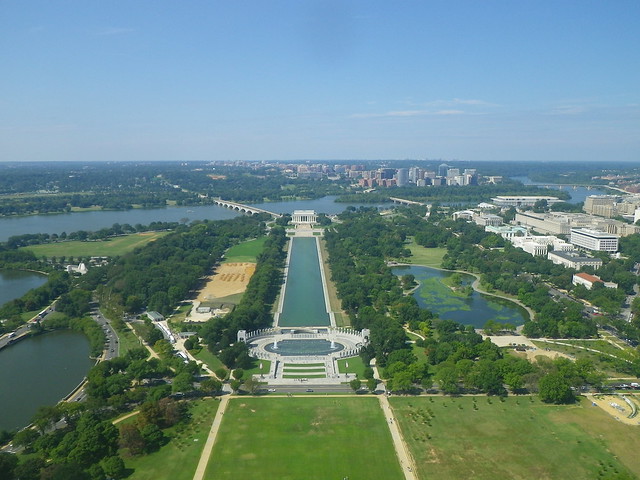
Monumental View

Watch out for the “free” Smithsonian museums! You get sucked in and suddenly it’s lunchtime and you’ve only seen half of the exhibits you wanted to peek at. That’s okay, because there are cafés inside all of them (some are better than others), but you’ll pay a hefty price for the convenience. If you plan on seeing an IMAX or two (Air and Space and Natural History, for example) or the Einstein Planetarium shows, it might be worthwhile to become a member and get discounted tickets. A membership offers a magazine subscription and gift shop and café discounts as well. Our favorite museums were Air and Space, Natural History and American History. We also liked the US Botanic Garden and the National Gallery of Art Sculpture Garden. Don’t miss the Museum of the American Indian; they have great exhibits for kids and a fabulous café with native food choices. Note that Arts and Industries and the Postal Museum are currently closed for renovations, and the new Museum of African-American History and Culture is still under construction (opening in 2015).
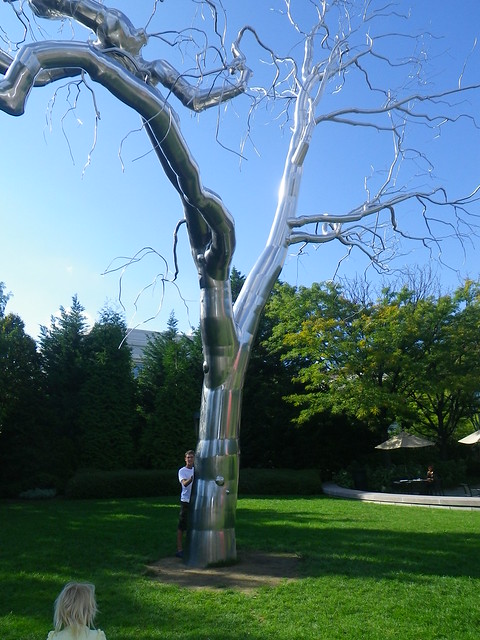
Stainless Steel Tree

Closed for repairs after a surprise 2011 earthquake, the Washington Monument only recently reopened to visitors who want to take the elevator to the top for spectacular views of Washington D.C. Tickets for a time-slot are free, but must be acquired the morning of the day you want to visit. During peak times, tickets are hard to get and go fast. September appears to be the perfect time to visit (when the weather is on the cooler side) because the summer visitors are gone and the school groups haven’t started yet. Homeschool advantage! This is a not-to-be missed monument, named for the Father of our Nation, not the city.

Reflecting Pool

A walk around the tidal basin will take you past the impressive Jefferson Memorial, Franklin D. Roosevelt Memorial, Martin Luther King Jr. Memorial, and the Japanese Lantern. Surrounded by ornamental cherries, the walk must be lovely in the spring, but we found it to be very long on a warm day and not for the faint of heart. We only made it half way, and thought we might rent Tidal Basin Pedal Boats another day to see the monuments by water. The cost is $22/hour for a four-person boat, but unless you are training for the Tour de France, you might find, as we did, that moving the boat requires a lot of hard work and they’re not nearly as fun as they look. It would take about an hour to get across the pond to the MLK memorial, but we turned around at the 30 minute mark so we could return the boat and get frozen lemonades at the refreshment stand instead.

Another not-to-be missed part of a trip to D.C., we enjoyed our walk to the Lincoln Memorial way more than the walk back. The length of that reflecting pond is staggering! A pleasant surprise on our way was the WWII Memorial. It had not been built the last time I was in D.C., and we found it to be a beautiful and thoughtful tribute to the men and women who served our country on all fronts. It lies between the Washington Monument and Lincoln Memorial, at one end of the reflecting pool. In that general area, you also find the Korean War Memorial and the Vietnam Veterans Memorial (on opposite sides of the pool). Plan a whole day to do this loop, and pack a picnic. Trust me.
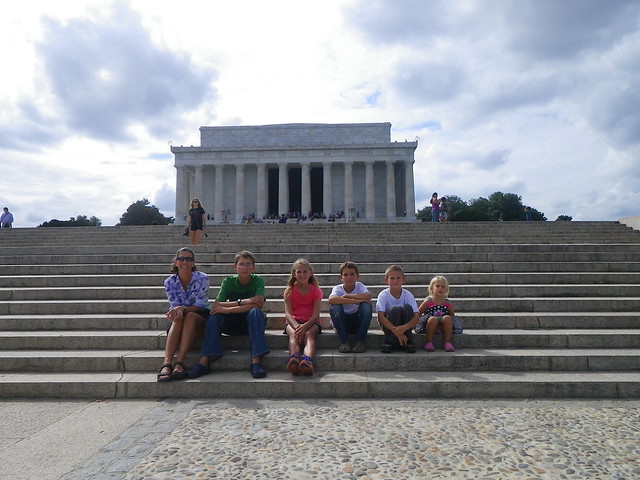
Lincoln Memorial

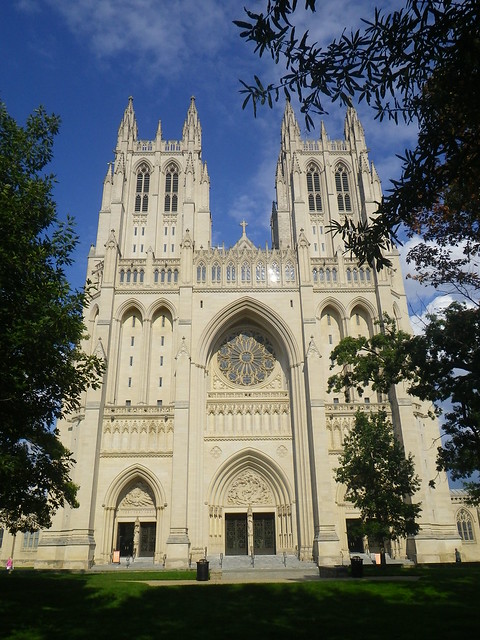
When you get tired of all that walking, or maybe if you’re pinched for time, one fabulous thing to do is take a ride on a double-decker bus which will show you all of Washington D.C. in a couple of days and let you off and on at all the major sights. We bought 48-hour tickets at one of the Big Bus Tours stops, and saw all of D.C. in two days’ time. Riding on the top level gives you a great view of the city, and the tour is narrated so you get a lot of back-story as you ride. We picked two places to stop each day, places we simply couldn’t have gotten to on foot. One day we had lunch at Union Station, an impressive building and a neat place to take kids, with lots of food choices. That same afternoon, we also made it out to Arlington Cemetery, and had enough time to see the eternal flame at the JFK grave site and the changing of the guard at the Tomb of the Unknown Soldier. For Arlington to be properly appreciated, it would take a whole day, but if you don’t have the luxury of time (or of a car), this is a great way to see part of it. The next day we visited the National Zoo in the morning (free as a part of the Smithsonian), and the National Cathedral in the afternoon. I don’t think I would have put the cathedral on my list, but am so glad we took their tour (not free). The sixth largest cathedral in the world, it rivaled anything I saw in Europe—the stained glass, ornately carved altar, lovely grounds, and guided tour made it a wonderful, off-the-beaten path stop. Note that Big Bus tour tickets also include a boat tour that leaves from Georgetown and passes for Madame Toussaud’s Wax Museum (where you will find all the presidents in almost-living color).
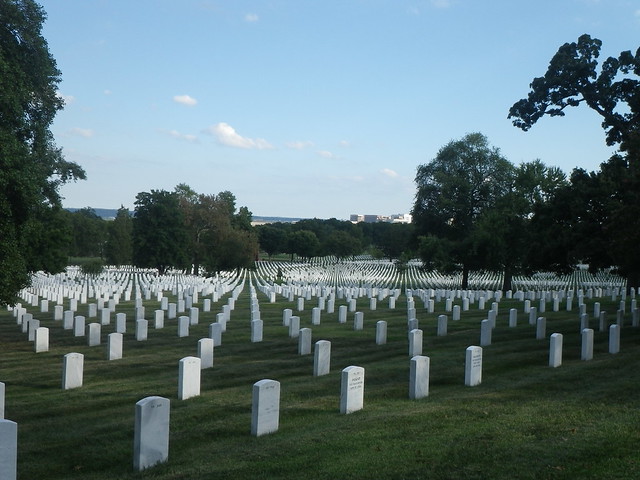
Arlington Cemetary

National Cathedral

If you’ve ever wanted to see the documents that make our country what it is, the National Archives is the place to see them. Declaration of Independence? Got it! Bill of Rights? Got it! Emancipation Proclamation? Got it! Edison’s patent for the light bulb? Got it! Poster of Rosie the Riveter? Got it! That and so much more makes this a hidden treasure and a surprising favorite.

I remembered the fun tour of the Bureau of Engraving and Printing from when I was a kid on vacation with my family, and it hasn’t changed much. You only need to acquire the free tickets during peak season, otherwise, you simply walk in during their morning or afternoon tour times (homeschool advantage again). Tours run every 15 minutes, starting with a bird’s-eye view of money printing-presses and ending in the gift shop, where you can buy bags of shredded money that didn’t pass muster. I thought the most fascinating part was the exhibit on how bills have been changed to prevent counterfeiting.

The gang’s all here—within a few blocks of each other—the seats of the three branches of our government. You can acquire tickets for a free Capitol Tour through your congressmen, or through the Capitol Visitor’s Center (I booked online). Though a thorough and wonderful guided tour, note that it does not include passes to see the senate or house; those passes must be acquired separately. Guided White House tours are also up and running again, but once the kids discovered that “meeting the president” was not part of the tour, they lost interest. I believe those tickets are acquired through a congressman as well. Given more time, we would have taken the Supreme Court tour and gone to the Library of Congress, but one can only spend so much time on Capitol Hill before one needs to go home for a drink (or a nap…or both).
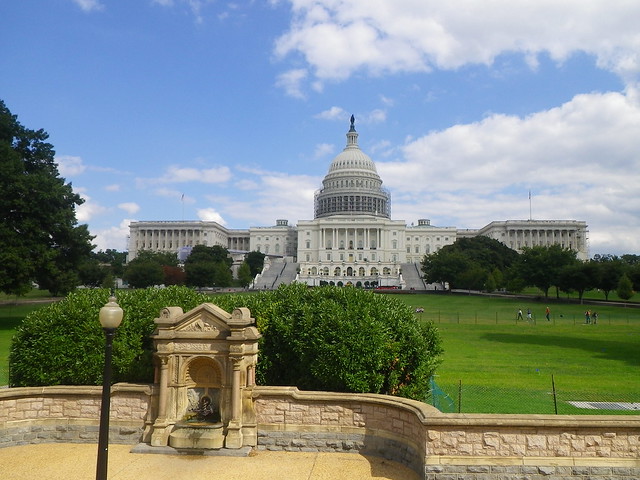
Capitol

I cannot possibly detail all the field trips we took, but I can mention in parting that going out to the Air and Space Museum Hangar at Udvar-Hazy (by Dulles Airport) was totally worth the effort—they have the space shuttle Discovery, the Concorde, and the Enola Gay—just to name a few of the famous exhibits in the world’s largest museum. I can also say that although the Spy Museum is cool, it is expensive for a family, and the ticket price is wasted on smaller children (and their caregiver), who will not be able to enjoy the museum for more than about five minutes. Similarly, we decided that a whole-family outing to the Holocaust Museum was out of the question, though I have vivid and haunting memories of some of the exhibits from when I went there as a teenager. I would say 12 and older would be an appropriate age to visit. In conclusion, you must accept that you cannot possibly go to all the amazing places during one family vacation—we were there for three weeks, going somewhere almost every day, and still did not see everything we would have liked to see. Best to pick a few places that everyone can enjoy and take lots of good pictures for the scrap book!
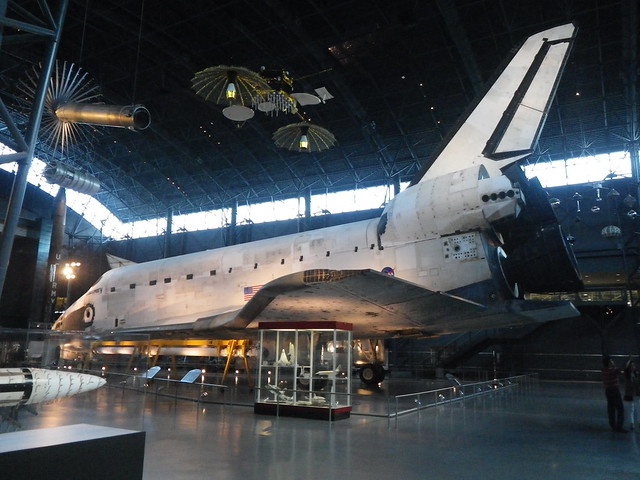
Discovery

A Wave Breaks

Heavy seas
A wave breaks
Sending shards of broken water
Onto the decks
Scattering early morning light
And leaving a rainbow of mist
Where the wave used to be

In the trough
A valley forms between two emerald hills
The fleecy foam like sheep
Dotting the smooth hillside

At the peak
A mountain landscape opens up
Snowy summits as far as the eye can see
Treeless and stark as the top of the world

A slide to the bottom
A thrill ride, a wind-made ski slope
The roar and rush fill my ears
And overflow into the other senses:
I see the roar, smell the rush, taste the crash

To my right
The next wave builds
In its translucence,
I see a sudden shape, a silhouette—
A lithe, sleek body, curved back, tapered tail
A fin breaks the surface
A submarine skier
Slides down the slope, leaps into the next,
And circles back around to take
Another sweet run
Like a ram on the Matterhorn,
The dolphin is at home in these mountainous waves

A wave breaks—
An alien in this liquid landscape,
A mere visitor from terra firma,
I’m transfixed and mesmerized—
My fear dissipates like the spray

Lost in the Historic Triangle

No trip into the Chesapeake would be complete without a stop in the York River. Easily accessible and picturesque, Yorktown is a perfect place to start a history field trip. We did a 2½-day passage from Charleston and stayed a few days at the York River Yacht Haven, directly across the river from historic Yorktown. The marina has a good restaurant, swimming pool and very nice ship’s store, and is only a ten-minute dinghy ride away from Riverwalk Landing where you can dock your dinghy for $5/day and either walk around town or ride the free shuttle to see the sights.

Yorktown is one corner of the so-called “Historic Triangle,” connected by the beautiful Colonial Parkway to Colonial Williamsburg and the historic Jamestown Settlement. There are so many things to see and do in this area that it would be easy to get sucked into the triangle—we spent a few days in Yorktown alone, then rented a car to take the children to Jamestown Settlement (not to be confused with the National Park, Historic Jamestowne, that sits on the actual site of the 1609 settlement). We went to Colonial Williamsburg later, at the tail end of our trip, while waiting in Hampton, Virginia for good traveling weather. One recommendation I would make for visitors headed this way: figure out what you’d like to do ahead of time and buy combination tickets.

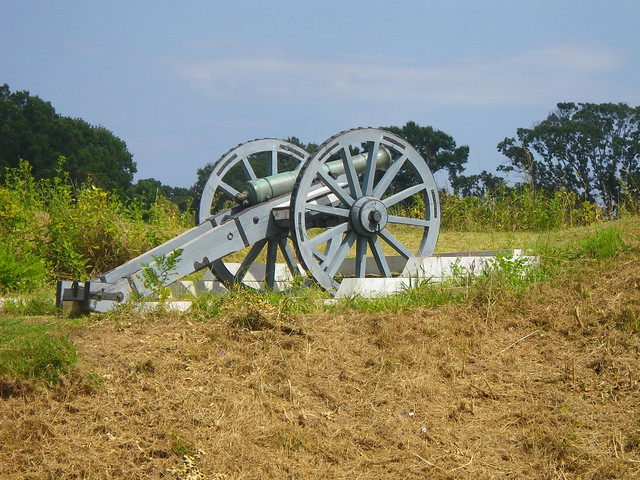
In Yorktown, there are three must-see stops: the Yorktown Victory Center, a museum and living history park, Historic Main Street, capped at its eastern end by the eye-catching Yorktown Victory Monument, and the Yorktown Battlefield (a National Park and the scene of the pivotal battle in the Revolutionary War). There was something very special about seeing Revolutionary War cannons in place on fortifications that were built so long ago. We had lunch one day on the waterfront at “The Carrot Tree,” a local favorite, and walked across the street to the Ben & Jerry’s for cool treats.

Yorktown Battlefield

Jamestown Settlement has changed a bit since I was there as a kid. The outdoor sites, the Indian Village, Fort and three historic ships at the Riverfront are just as I remembered them, peopled with guides in period-dress who answer questions and explain life as it once was. But the new indoor museum exhibits almost dwarf the exterior living history ones. The enormous, air-conditioned building tells the whole story of Jamestown, from its days as a private business venture to its role in the American Revolution, with more artifacts and information than one could take in in a single perusal. I was very happy we took the extra day and rented a car—the kids got a chance to see, in a sense, where the whole American story began.

20140905_3_4728

20140905_3_4738

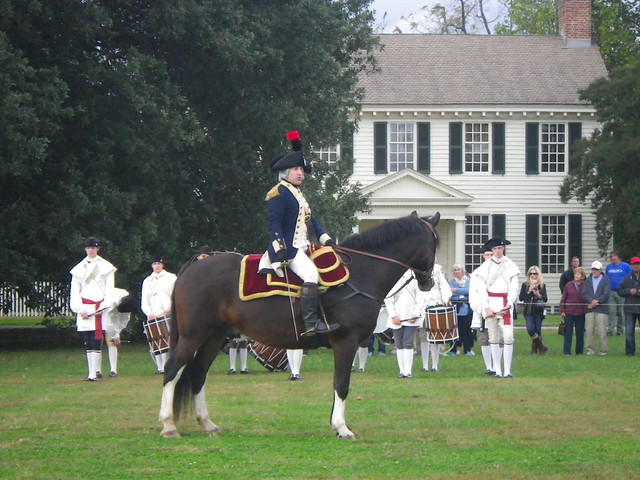
By the time we visited Colonial Williamsburg, the kids had ceased to be amazed by living history museums and hundreds-of-years-old buildings that had been preserved and restored. Too bad, really, because Williamsburg really is amazing, if only because of its size and scope. The town exists as it did on the eve of the Revolutionary War—period costumes, furniture, re-enactments, the whole bit. On the recommendation of a friend, we decided not to buy admission tickets and simply see what we could for free. We parked at the Visitor’s Center and watched a free film there on the Revolutionary War (very good) and got on the free shuttle bus which makes a circuit around Colonial Williamsburg and stops at important places where you can hop off/on. We walked around the 1774 town and peeked into windows and watched a demonstration of Revolutionary War cannons. We even got to hear a rousing speech given on horseback by the Marquis de Lafayette himself! Lunch, of course, is never free, but we found a great sandwich place (the Cheese Shop) and had a lovely picnic on some park benches. Given more time (and more enthusiastic traveling buddies), I would spend the money to go inside the historic buildings and the folk art museum, but with the time and energy we did have, I felt like we got a great idea about what life was like in the colonial era just by walking around Williamsburg.

Marquis de Lafayette

Taken individually, each site has something valuable to offer, but as a trio, one gets a clear picture of how what started as a small band of English colonists became, over time and with much struggle, the United States of America. On that note, I might suggest an order for visiting the Triangle: start at Jamestown, then go to Williamsburg, and end in Yorktown. Plan to spend at least a day in each place, but be warned—you may start reading plaques and get lost in the Historic Triangle!

Bold New Look, Same Great Taste

Take Two Sailing is now on WordPress.  You may have noticed that our pictures widget disappeared from the right sidebar some time ago.  It broke, and rather than figure out how to fix it, I upgraded the whole shebang.

Everything should be back to normal or better now.  The pictures are back.  We might be changing things around a bit, but for now I’ve gone for equivalency.  If something doesn’t work, use the Contact page to let me know.

Patriot’s Point, Mt. Pleasant, SC

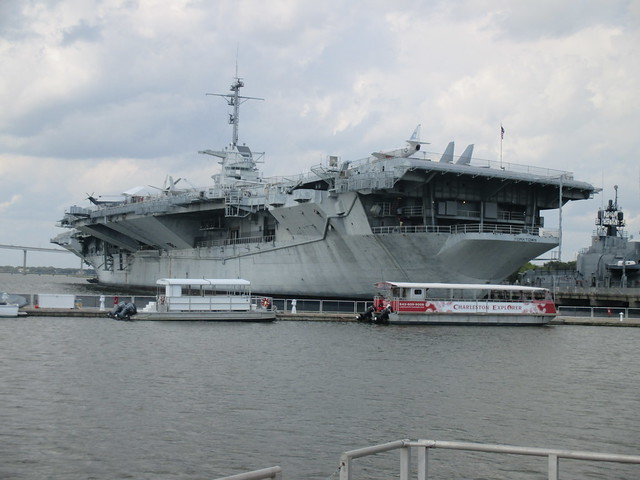
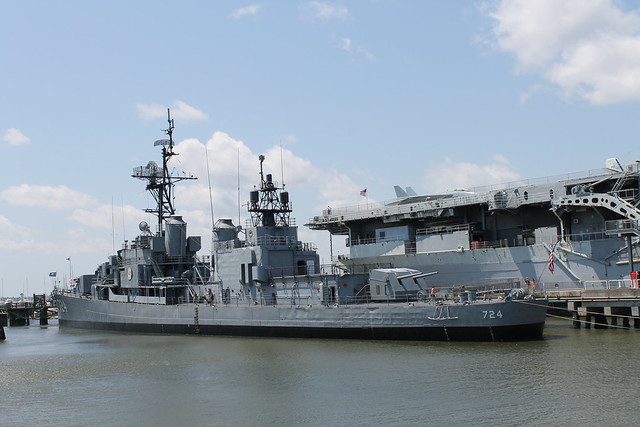
The main exhibit at Patriot’s Point is an aircraft carrier, the U.S.S. Yorktown. Named after a previous aircraft carrier (possibly to confuse the Japanese during WWII), the Yorktown was commissioned in 1943 and decommissioned in 1975, when it was turned into a museum. While we were there, we toured the fire room, the engine room, the flight deck, and the bridge. I thought it was interesting to see how they navigated without computers. The various jet fighters on display were also cool. I felt like I could have spent another day looking at all the exhibits on the ship.
 
20140819_2_0186 
 
Another of the ships we toured was a destroyer, the U.S.S. Laffey. Named after a civil war hero, the Laffey is over 370 feet long and served in the Pacific during WWII. Later, it was decommissioned and turned into a museum ship. While we were there, we watched a video about how the Laffey repelled one of the largest Kamikaze attacks in history. Called “the ship that would not die,” the Laffey was hit by four bombs and six Kamikaze suicide pilots. Amazingly, the Laffey not only returned to base, but returned to service. Now it remains as a memorial to the brave souls who fought in the US Navy. 
 
20140819_3_4533
 
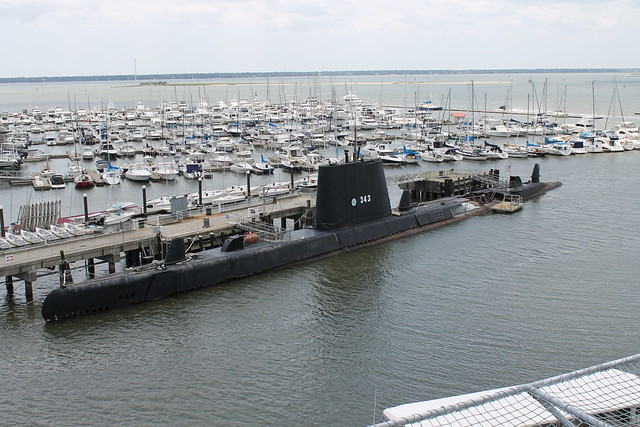
The Guppy III submarine, USS Clamagore, was the last thing we visited at Patriot’s Point. She is over 300 feet long, and the only Guppy III surviving as a museum. She is a diesel submarine, one of the last before the introduction of nuclear submarines. There were eight compartments, separated by waterproof bulkheads. Like many of its contemporaries, it was named for a fish, in this case a Clamagore is also called a blue parrotfish. It was fun to imagine myself as one of the men who lived and worked under the sea.
 
20140819_3_4565 

Little Red Wagon

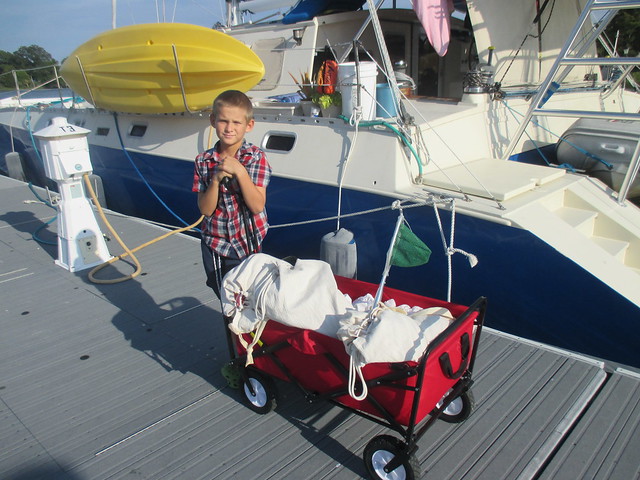
I’ve got a new little red wagon, but it isn’t a Radio Flyer. I borrowed a Mac Sports Folding Utility Wagon from a fellow boater in St. Augustine (thank you, Tiki Trek!) to fetch provisions one day and knew I had found the perfect vehicle. For years I have carted laundry and groceries in a folding and rusting metal cart (the granny kind) that never holds enough stuff and is just the perfect size and shape to always be in the way wherever you try to store it.
 
20140903_2_0324 
 
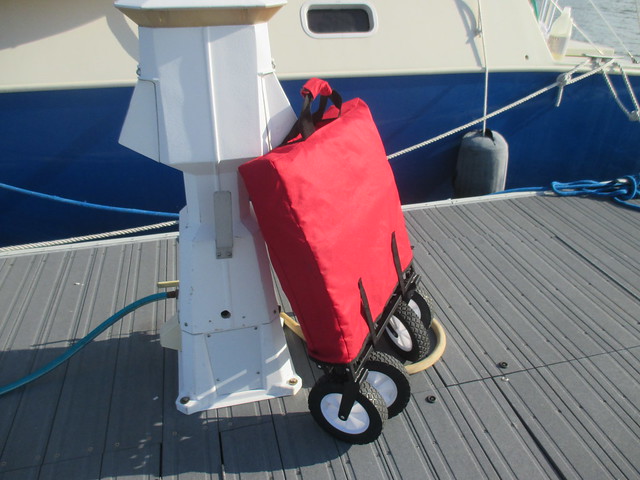
The FUW, on the other hand, folds into a neat little square which fits into its own bag and stows nicely in one of our aft lazarettes. We ordered ours from Dick’sSportingGoods.com, for about $70. It can carry up to 150 pounds—that’s a lot of groceries—and it folds and unfolds in the blink of an eye. The fabric is a sturdy synthetic canvas and the frame is steel. The oval-shaped handle telescopes and snaps into place, and there are even two pockets on the front for water bottles or small items. The wheels are hard rubber, and with the front two articulating, turning sharp corners with a heavy load is not a problem.
 
20140903_2_0325 
 
The only drawbacks I have discovered are that it’s heavy (the tradeoff for durability, I guess), and that the wheels don’t have locking brakes, which makes it a little tricky if you stop on a slope or when you fold it to put on the cover. The instructions state multiple times that the wagon is not to be used as a conveyance for small people, but my small person has already climbed in on top of the laundry for a ride with no ill effects. The metal frame makes it seem uncomfortable, and the warnings make it clear that you can’t sue Mac Sports if your tot falls out of the wagon or gets his little fingers pinched in the folding mechanism. Aside from these minor concerns, the wagon is a new favorite and draws compliments wherever I take it.

Charleston Single

While we were in Charleston, we were invited to the house of Grandma Mary’s friends, Cindy and Pete. They made hamburgers and hot dogs, and gave us the tour of their 200-year-old house on Church Street. It was a huge, and very beautiful, house that had been built by a Revolutionary War hero. Like many of the old houses in Charleston, it had a piazza, a second-floor porch accessible by stairs from a false front door on the ground level. After lunch, we played hide and seek until it was time to go. We had fun with them, and hope to come back soon.

August in St. Augustine

We crossed the Gulf Stream in mid-July and stopped in Ft. Pierce for a couple of weeks to visit old friends, replace our brand-new malfunctioning chart-plotter, and order a new alternator to replace the one we fried. Deciding that we had plenty of summer left and nothing pressing to do in Florida, we headed up the coast with a general goal of taking the kids on an extended U.S. History field trip, starting in the nation’s oldest city and ending up (Lord willing and weather permitting) in the nation’s capital.
 
We arrived in St. Augustine on a very special date: Eli’s 13th birthday. Making a passage is probably not the way any of our kids would choose to spend a birthday. We tried to make up for it by going ashore for a nice dinner at Columbia on St. George’s Street, but it backfired as most of the crew was still feeling the residual motion of the boat and didn’t have much of an appetite.
 
We spent the next several days touring the old part of the city and visiting museums and historic places and enjoying lunches out (a rare treat for our large family). Jay has been working as we travel this year, so he joined us whenever he could and enjoyed some quiet working time on the boat when he couldn’t. The old city is beautiful, in part due to its Spanish colonial influence—it was planned around a plaza like an old-world city, and also thanks to the beautiful architecture of Gilded-age hotels and churches built by Henry Flagler in the early 1900s. 
 
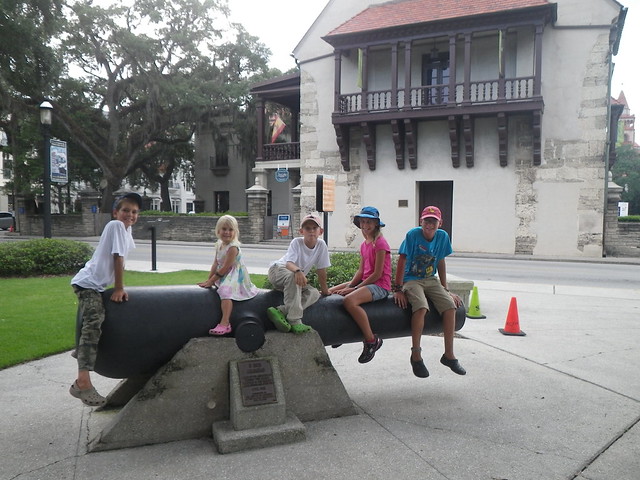
Kids on Cannon 
 
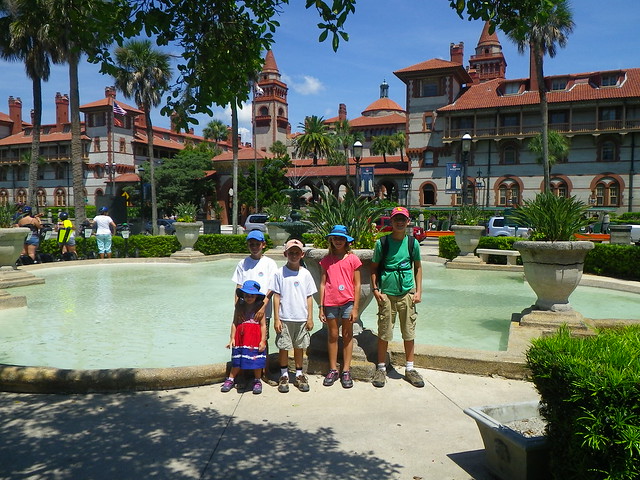
Ponce de Leon Hotel 
 
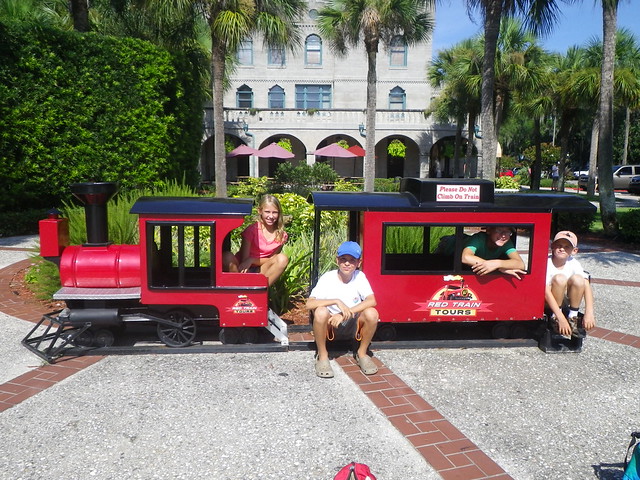
St. Augustine is very boater-friendly, and convenient for visiting by water. Most of the museums, old buildings, and restaurants are walking distance from the municipal marina, which has a breakwater and floating docks, as well as a mooring field and dinghy dock. The Red Train has a station at the marina, near the nation’s oldest mini-golf course, making it convenient to take a guided tour of the city and get a round of $1 mini-golf! Getting groceries proved a bit more challenging, with the closest grocery stores requiring a taxi to go out of the old city or a dinghy to go across Matanzas Bay to the Publix near Vilano Beach.
 
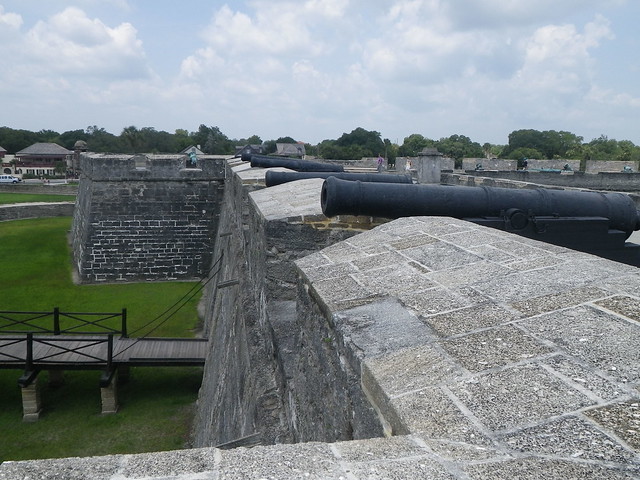
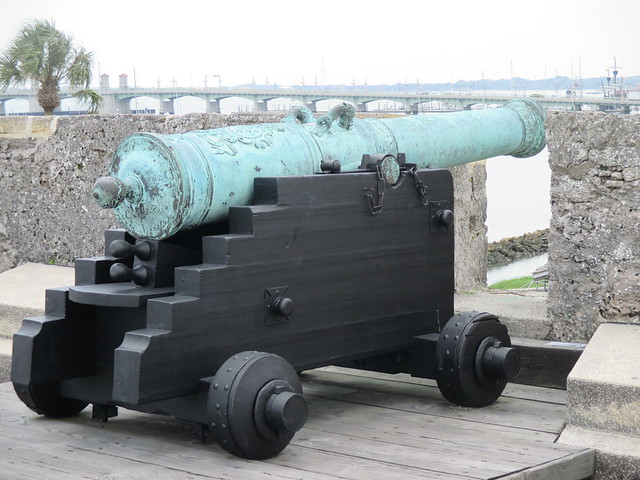
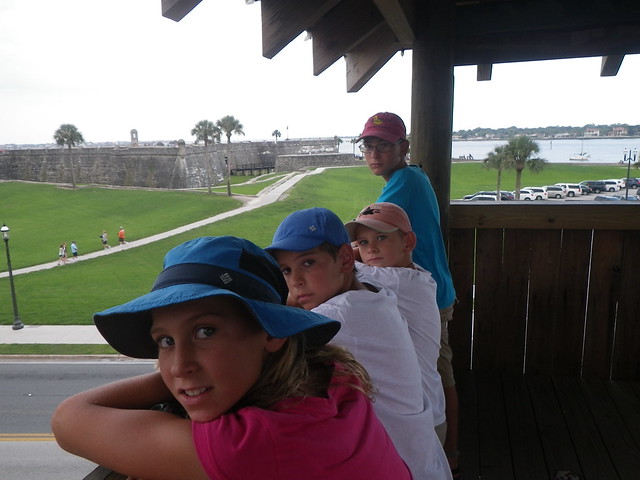
The Castillo San Marcos, the most remarkable feature of the St. Augustine water-front, is just a short walk from the municipal marina. This Spanish fort is over 300 years old, but has aged beautifully—the sedimentary stone of which it is built (made by Nature of compacted coquina shells) shows little sign of crumbling, and the bronze cannons are still beautiful, though their cast iron counterparts have not fared so well. In its long and varied history, it was assaulted many times by many different nations, but was never taken in battle. A walk around the fort, now a part of the National Park Service, makes it clear why this should be. We found the ranger talk and the museum exhibits inside the rooms of the lower level to be helpful and informative. The tickets were inexpensive and good for a week—long enough to come back on a weekend and see the cannons being fired off in a re-enactment.
 
Castillo cannons
 
San Marco Cannon 
 
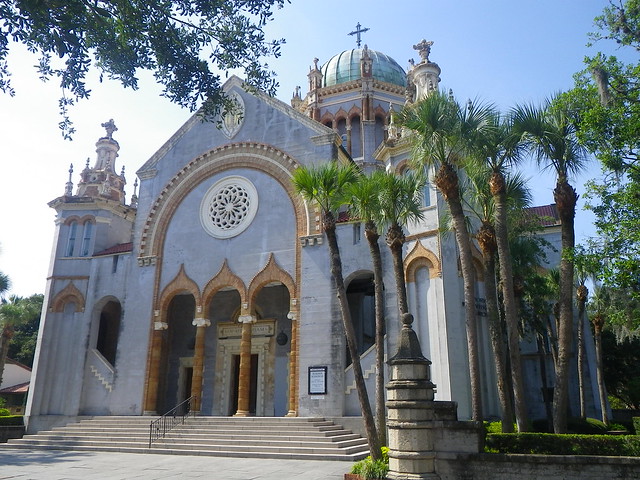
We decided to ride the Red Train, a guided tram which runs in a circuit around the city, stopping at major points of interest. For our family of seven, it cost about $100 for a three-day pass, and we could hop on or off at any point, as the trains run continuously until 4:30 and stop every 20 minutes or so on their one-and-a-half hour tour. Some highlights of the tour include stops at the Old Fort, Old City Gates (with access to St. Georges Street, a walking street with restaurants, shops, and museums), the Fountain of Youth Archeological Park (which has a natural spring, Timucuan artifacts, and history related to Ponce de Leon’s discovery of Florida in 1513), the Victorian Jail built by Henry Flagler, the Colonial Quarter living history museum, the only Martin Luther King Jr. Avenue in America on which the famous civil rights leader actually led a march, Flagler College (once the posh Ponce De Leon Hotel, one of the first buildings in America to be lit with Edison’s electric lights), the Florida School for the Deaf and Blind (where Ray Charles went to school), the Lightner Museum (housed in what was once Flagler’s Alcazar Hotel with the largest indoor swimming pool in the world), the Memorial Presbyterian Church (built by Flagler for his daughter, and containing a 5000-pipe organ, Tiffany stained glass, and the family mausoleum), the Plaza, the Basilica of St. Augustine, and Aviles Street, a narrow, Spanish-colonial-era street with more shops, museums and restaurants. 
 
Red Train
 
Flagler church 2
 
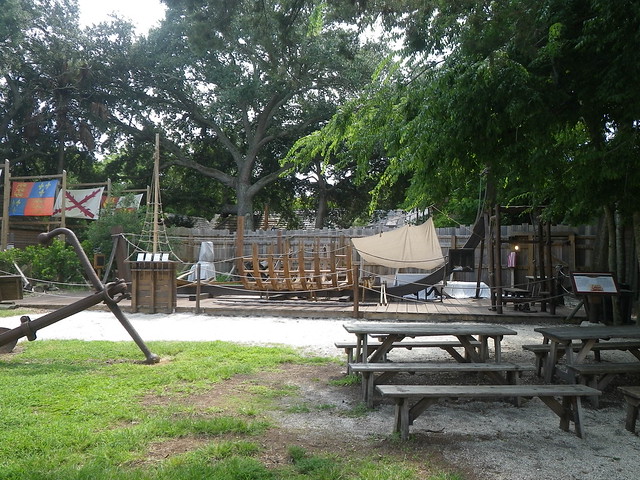
One of our favorite stops was the living history museum at the Colonial Quarter. In a one-hour guided tour, you can experience the changes in St. Augustine through the centuries, from 16th-century Spanish settlement, to 17th-century fortified town, to 18th-century British Colony. The knowledgeable and authentically-dressed guides walk you through exhibits like the building of a wooden Caravel, a working blacksmith shop, the firing of a Flintlock rifle, replica Spanish colonial homes and the restoration of an original coquina house. The museum is laid out so that you can walk through the different sections after the tour at your own leisure to get a closer look (and read those ubiquitous plaques). You can climb the rebuilt Spanish watchtower for a great view of the Castillo and the old city, see a display of the many flags that have flown over St. Augustine, see how a printing press works, and visit the gift shop, which contains some unique items. You can then take your admission bracelet to either the Spanish Taberna or the British Pub, Bull & Crown, for a discount on drinks or food. It was a great way to get an overview of the rich history of this city.
Colonial Quarter
 
Castillo 4 
 
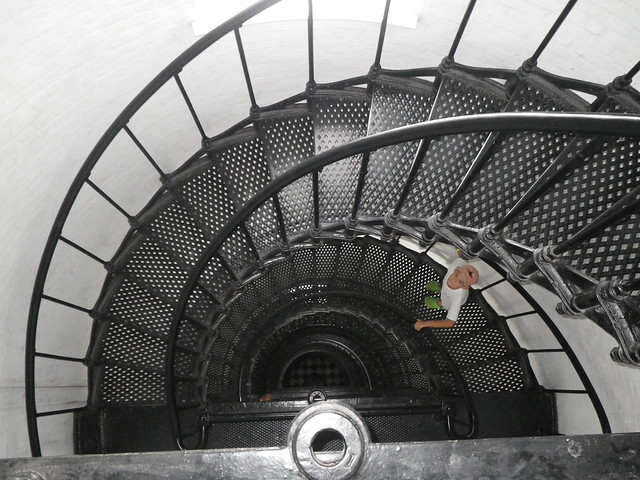
We celebrated another special day on August 2nd—our 17th wedding anniversary (and, not coincidentally, the 17th birthday of our remaining boat kitty, Spice). The next day, the 5-year anniversary of our move aboard Take Two, we moved the boat to a marina and resort on Anastasia Island so that we could have better access to the grocery store, beaches, a swimming pool, and parks. A long walk or short dinghy ride gives you access to the St. Augustine Lighthouse, one of the few remaining working lighthouses in America which you can climb. The museum there is partnered with the Smithsonian and includes a hike up the 219 steps of the 1873 lighthouse where you can go out on the balcony and enjoy the 360⁰ view, the beautifully-restored 19th-century keeper’s house, a boatyard which restores vintage wooden craft, and an exhibit highlighting underwater archeology. It’s a must-see if you’re in the area.
 
Lighthouse 2 
 
The Atlantic beaches in St. Augustine were a bit of a disappointment. To beach connoisseurs like our kids, the water was too cloudy, the sand either too dirty or too shelly, and the waves were either too small for surfing or broke too close to the shore to be of any use. Despite our being spoiled beach brats (thanks to Bahamas beach perfection), we still enjoyed ourselves at Vilano Beach (a car beach!), and at the beaches on Anastasia Island. You can find wide swaths of relatively deserted beach at the state park, or better conditions for surfing and body-boarding near the pier at the public beach. 
 
We also enjoyed meals out in St. Augustine, and found the selection and quality to be very good. Lunch at A1A in the old city was high-quality, fresh and original. Our anniversary dinner at Centro Piano Bar was classy-gourmet in a great atmosphere, and the Mellow Mushroom on Anastasia Island is the some of the best pizza we’ve ever had. The Conch House on Anastasia is a fun place to eat as well, with lots of seafood options and seating in little tiki huts over the water. (And their key lime pie is at least as good as pie found in the Keys.) Our impression after a few weeks in St. Augustine is that this is a beautiful town full of history, gorgeous architecture, great restaurants, and lots to do. 

Rachel Swims!

One of the most important milestones in our home is the day a child learns to swim. This, of course, is so that we don’t have to worry so much about little people going outside and falling into our front yard. Rachel has been in the water since she was days old—her swim lessons started with the teaching of survival skills, like floating on her back. When she fell off the dock last year, she did not panic, but popped to the surface and waited for help (only seconds away in that case). Since then, she has been a lot more careful on docks, and we have been pushing the swimming. By age two, she had all the requisite skills: floating, kicking, holding her breath, forward motion using her arms—but she had not put them all together. She would jump in the water, swim underwater until she ran out of air and we’d fish her out, spluttering. This summer, she added “coming up for air” to her repertoire. We’ve had access to a pool for the last couple of weeks, and her swimming has really improved. She’s comfortable jumping in the deep end and getting herself back to the ladder. I can tell you, we’re all celebrating that achievement and will sleep a little easier knowing that she’s joined our amphibious crew.


FAQ: How do you handle storms at sea?

People often comment that we are brave to do what we do. If what they mean by brave is feeling afraid, but refusing to be ruled by fear, I might agree. One of the chief fears people have about boats is encountering storms at sea. We can often choose the weather in which we depart, but cannot control the weather we experience once offshore. And once you’re in it, like the children’s chant says, “you can’t go over it, you can’t go under it—you’ve got to go through it.”

Summer weather in Florida is pretty predictable. Except for during hurricanes (which you can plan and prepare for), the daily weather forecast is about the same. There are land and sea breezes which take shifts, a middle-of-the-day lull, and afternoon thunderstorms which can pack a mighty punch (we’ve seen wind speeds of up to 65 knots). Tied to a dock, these approaching storms are fun to watch—the cumulonimbus clouds building and billowing, the wind shifting and howling, and rain that is more waterfall than shower—all except for the lightning, which is indiscriminate and always terrifying if you live in a home with a 68-foot metal pole on top. At sea, I can attest, these storms are not to be trifled with.

I never feel more alive, or rather, more aware of the fragility of my life, than at sea in rough weather. I may be one of those rare, sick-minded people that feel a sort of exhilaration, even joy, in the midst of these storms. If I can’t control it, I can at least appreciate it. The wild beauty of foaming wave-tops, lightning that glows white-hot or pinkish-blue and hurts your eyes for its brightness, thunder that you can feel and not just hear—these are awesome forces to behold from the deck of a wave-tossed boat.

The children, sensing a change in the weather, naturally look to us for cues as to how to respond to what sometimes feels like an emergency. We may rush around for a few moments stowing loose objects, digging out rain gear, taking down sails, and starting an engine. But then I do something mundane, like wash dishes or read aloud, to send the message that it’s business-as-usual. If people feel fearful, we pray, and retell the Bible story of Jesus calming the storm with a few words, and wondering at the lack of faith in his anxious disciples. This story restores confidence, if not fearlessness, because it reminds us that we know the Maker of these forces and that we find ourselves in His capable hands, come what may.

Jay, as the captain, is usually at the helm in his foul-weather gear trying to keep the boat at a comfortable angle to the wind and waves. I can only imagine what impression this leaves on our young children, especially boys beginning to get a glimpse of manhood, to see their capable Dad seemingly in control, keeping his family safe and exuding calm and quiet. In reality, we dread sailing in rough weather. It is humbling and physically uncomfortable. But we also know that these experiences are making us tougher and more capable sailors. At the very least, our grandchildren will be regaled with good stories, because, as we have remarked before, it’s never the calm, quiet, boring days which make for good stories.